
Understanding fishing rod power and action helps you choose a rod that fits the way you fish. Walking into a tackle shop for your first rod can feel like studying for a test nobody handed you the material for. You see “Medium-Heavy Fast” printed near the handle, and unless someone explains what that means once a fish is pulling back, it’s just letters and a hyphen. Let’s get that sorted out before you start comparing products, so when you do go shopping, you’re reading specs instead of guessing at them.
Quick answer: rod power vs. action
Power describes how much force it takes to bend a rod. Action describes where the rod bends.
Power
Choose from ratings such as light, medium, and heavy. Power helps match a rod to the fish, lure, and cover.
Action
Choose from ratings such as fast, moderate, and slow. Action describes how far down the rod bends under load.
Example: A medium-heavy, fast-action rod has medium-heavy power and bends mostly near the tip.
Why Power and Action Matter More Than the Price Tag
A $200 rod with the wrong power and action for what you’re fishing will frustrate you more than a $40 rod that actually matches your situation. Spending more makes sense once you know what you need. It just doesn’t fix a mismatch on its own, because power and action determine how a rod behaves when it counts: the hookset, the fight, and how well you can feel a bite in the first place.
Price usually tracks with material quality, components, and durability. It doesn’t automatically track with whether a rod suits bass fishing with a quarter-ounce jig versus hauling catfish out of a river channel. Those are two different jobs, and a rod built for one will feel wrong, maybe even fail you, doing the other.
So before you start looking at brand names, get comfortable with what power and action actually do.
Rod Power: What Light, Medium, and Heavy Actually Do When a Fish Pulls
Power describes how much force it takes to bend the rod, and how much backbone it has left to fight back once it’s bent. Think of it as the rod’s strength rating. Manufacturers label it light, medium-light, medium, medium-heavy, heavy, and sometimes extra-heavy.
Here’s what that feels like out on the water:
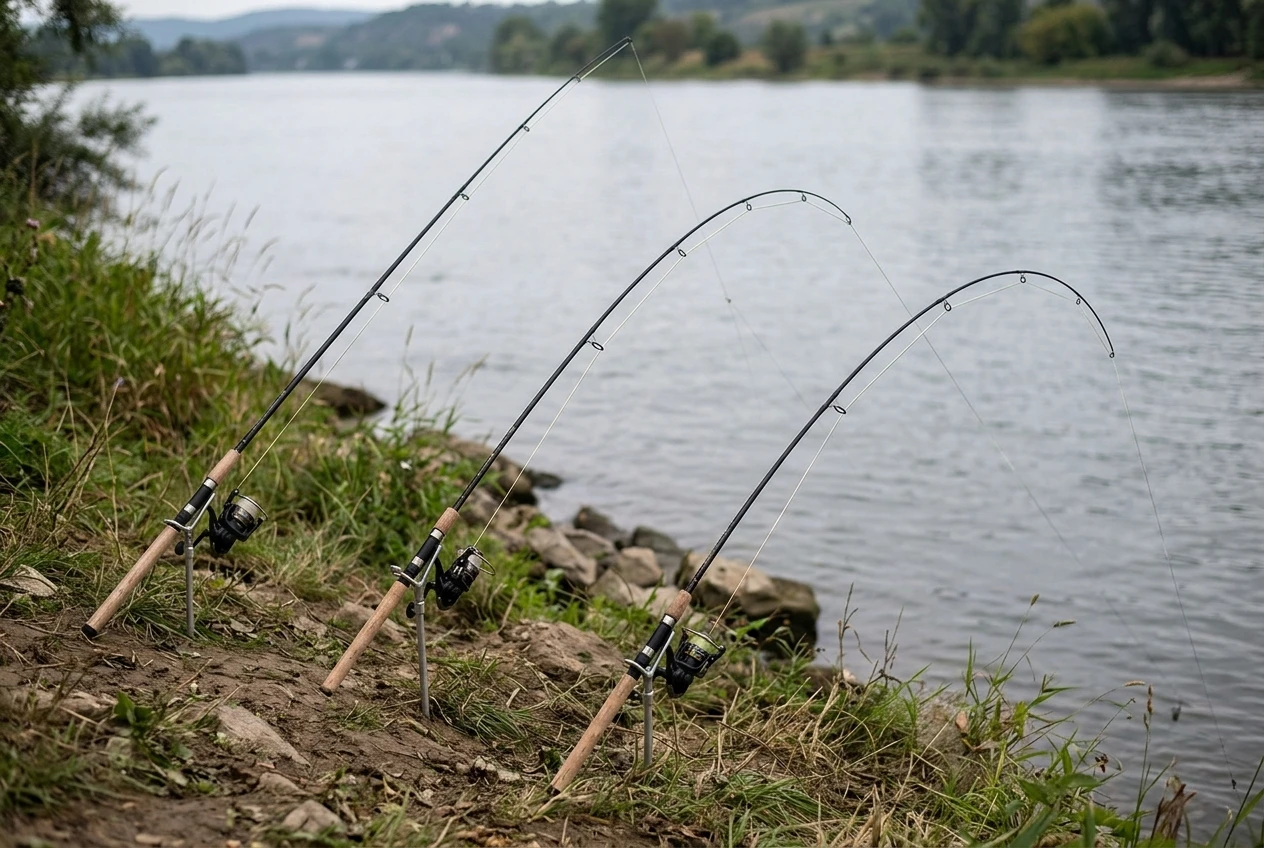
- Light power bends easily, even under modest pressure. A small fish, a panfish or trout, will put a visible curve in a light rod. You feel every head shake and every bit of resistance, which is a big part of why light tackle is so fun to fish.
- Medium power is the all-around choice for a lot of freshwater fishing. It has enough backbone to set a hook firmly on bass-sized fish, but still bends enough to protect light line from snapping.
- Heavy power barely bends under normal casting pressure. It takes real weight, a big fish or thick cover, to load it up. This is what you’d reach for when you’re flipping jigs into heavy weeds or targeting big catfish or saltwater species.
Power controls how much force gets transferred to the fish and how much shock gets absorbed by the rod instead of your line. Pair a heavy rod with light line and you’re asking for break-offs, because the rod isn’t bending enough to cushion a hard run. Pair a light rod with heavy line and you lose hook-setting power, because the rod folds before it can drive the hook home.
Rod Action: Fast, Moderate, and Slow, and How Each One Changes Your Hookset
Action describes where along the rod the bend happens, and how quickly the rod straightens back out after it loads. This is the spec that trips up most new anglers, because it sounds like it should mean the same thing as power. It doesn’t.
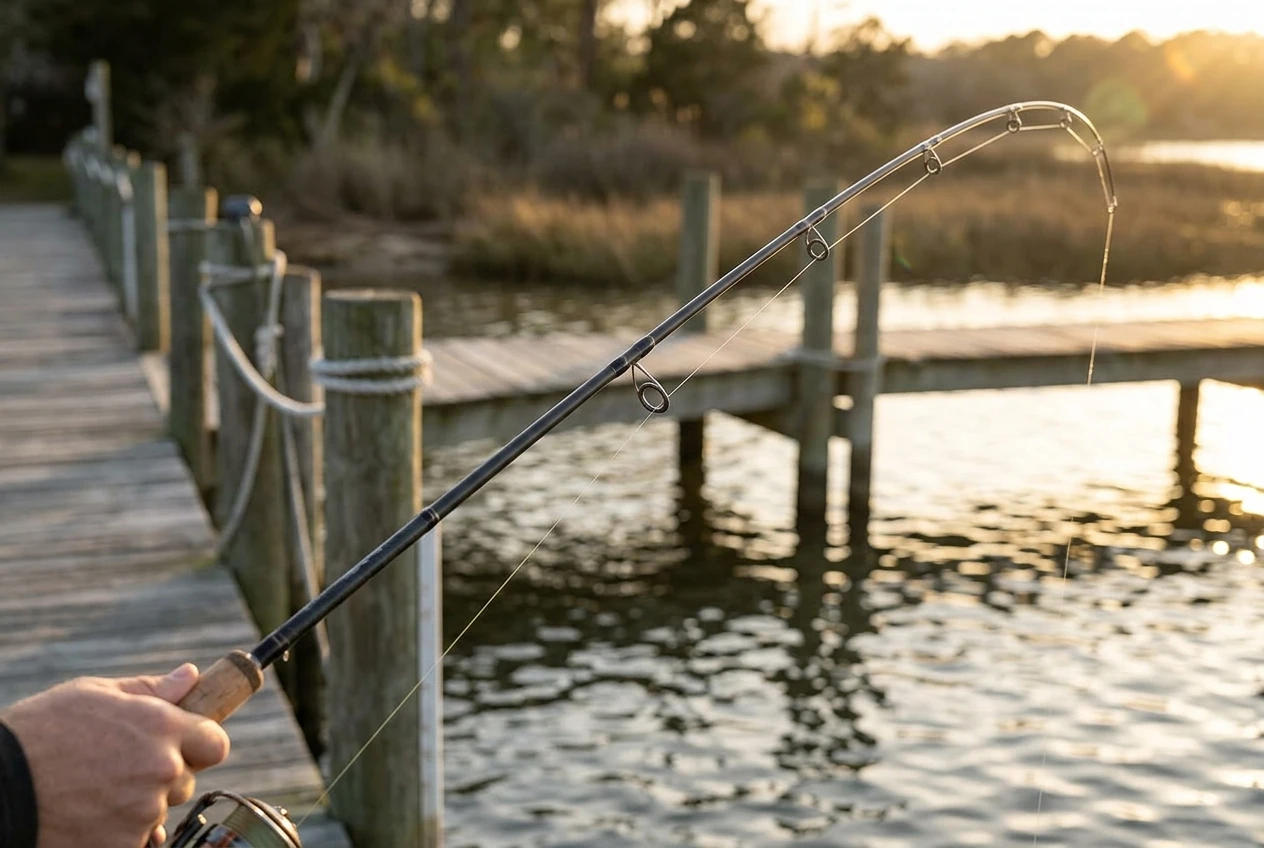
- Fast action bends mainly in the top third of the rod. The rest stays stiff. That makes for a quick, responsive hookset, since there’s less rod to load before the hook point drives in. Fast action is the standard pick for single-hook lures like jigs and worms, and most bass techniques where a sharp, immediate hookset matters.
- Moderate action bends through the top half, sometimes more. It loads a bit slower, which gives a fish more time to fully take a lure before the hook sets. This works well for treble-hook baits like crankbaits, where a hair-trigger hookset can actually pull the hooks away from the fish instead of into it.
- Slow action, sometimes called full or parabolic action, bends all the way down into the handle. It’s less common for general use but shows up in some trout and panfish rods, where the whole rod working together protects light line and small hooks from a hard, sudden pull.
A fast-action rod loads mostly at the tip and snaps back quickly, so the hookset arrives fast and sharp. A slow-action rod loads along its whole length and returns more gradually, so the hookset builds up over a longer moment. Both will drive a hook home. They just deliver that force on different timelines, and that difference is exactly what you feel the instant you set the hook.
The Mix-Up Almost Every New Angler Makes Between Power and Action
Here’s the part that confuses most beginners: power is about strength, and action is about where the rod bends and how fast it recovers. A rod can be light power and fast action. It can be heavy power and moderate action. The two specs are independent of each other, even though they usually get printed side by side on the blank.
A medium-heavy fast rod is strong, that’s the medium-heavy power, and it bends mostly at the tip with a quick snap-back, that’s the fast action. A medium-heavy moderate rod is just as strong, but it loads further down the blank and returns more slowly. Same strength, different feel, different hookset timing.
New anglers often assume “fast” means “strong” and “slow” means “weak.” That’s not how it works. A slow-action rod can still have serious backbone if it’s rated heavy power. The slowness is about where and how the rod flexes, not how much force it can handle. Once that distinction clicks, reading a spec sheet gets a lot easier, because you’re answering two separate questions instead of one confusing one.
Matching Your Rod to the Fish and Lures You’ll Actually Use
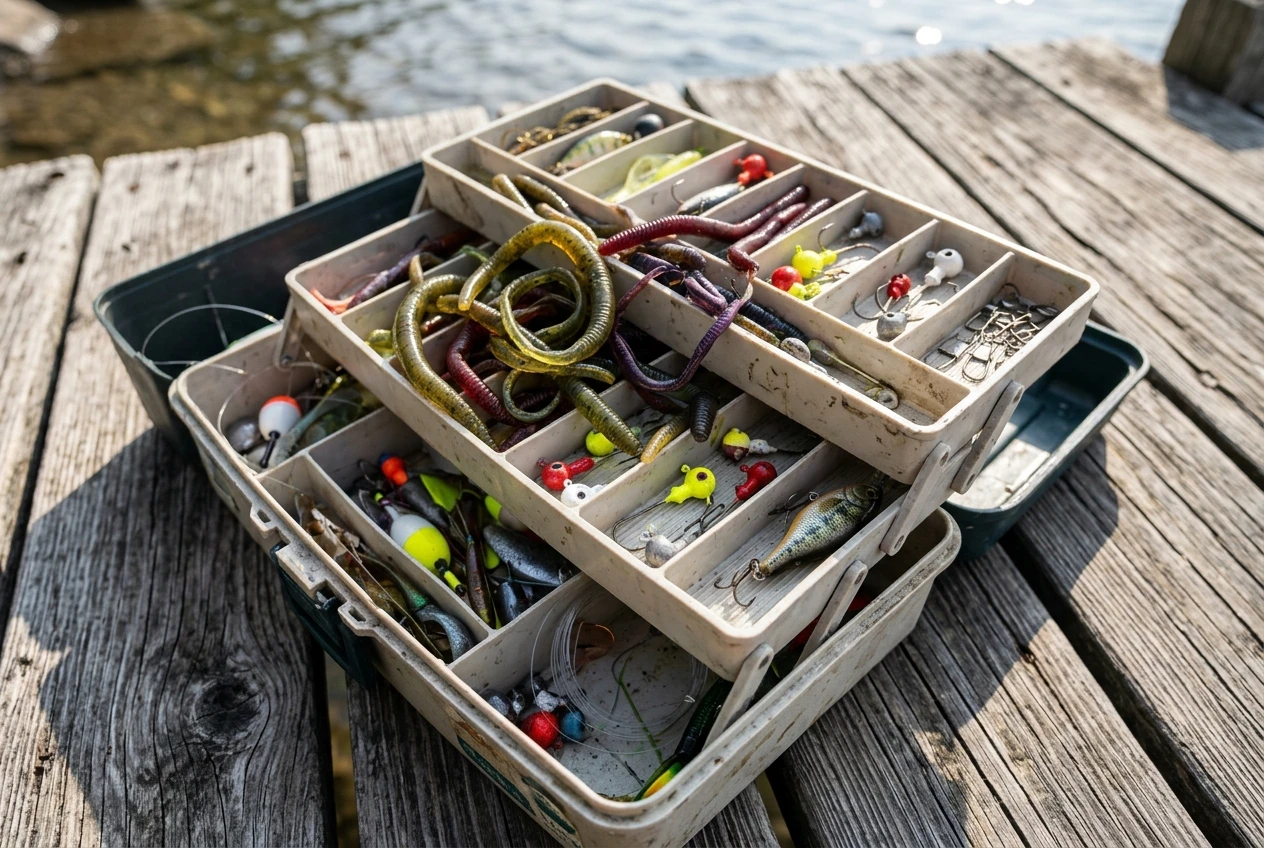
This is where power and action stop being abstract and turn into actual decisions. A few common pairings to use as a starting point:
Quick rod and lure matching guide
Panfish, trout, and finesse fishing
Light to medium-light power with a fast or moderate action can suit light lures and smaller fish.
Worms, jigs, and Texas rigs
Medium to medium-heavy power with fast action gives you a useful mix of casting control and hook-setting strength.
Crankbaits and treble-hook lures
Medium power with moderate action can help the rod bend more easily when a fish pulls against treble hooks.
Heavy cover and larger fish
Heavy power can help when you need more strength. Choose the action based on your lure and fishing conditions.
Power scales with the size and strength of the fish and how heavy a cover situation you’re fishing. Action scales with the hook type and how much time you want to give a fish to commit before you set.
Length and Material: The Other Two Choices That Change How a Rod Feels
Power and action are the core of the decision, but two more factors shape how a rod performs.
Length affects casting distance and leverage. Longer rods, generally in the 7-foot range, cast farther and give you more leverage fighting a fish, but they’re a bit less precise for tight-quarters casting. Shorter rods, around 5 to 6 feet, offer more control for pitching and flipping into tight spots, at the cost of some casting distance.
Material usually means graphite, fiberglass, or a blend of both. Graphite is sensitive and lightweight, so you feel bites better, but it’s more brittle and less forgiving of a hard mistake. Fiberglass is heavier and less sensitive, but it’s tough and flexes well under strain, which is part of why a lot of crankbait and catfish rods lean fiberglass or a glass-graphite composite. Neither one wins across the board. It depends on whether you’re prioritizing feel or durability and forgiveness.
A Simple Way to Pick Your First Rod Without Getting Lost in Specs
A quick checklist for your first rod
1. Think about the fish and cover
Choose rod power based on the fish you expect to catch and how much cover you need to fish through.
2. Match action to the lure and hook
Fast action suits many single-hook lures. Moderate action is a common fit for crankbaits with treble hooks.
3. Consider length and material
Longer rods can cast farther, while shorter rods can offer more control in tight spaces. Fiberglass favors durability and flex; graphite favors sensitivity.
A versatile freshwater starting point: Try medium power, fast action, and a length around 6.5 to 7 feet. Adjust as you learn which fish and techniques you use most.
Once you’ve got a handle on power and action, see how those choices play out in a real setup in our guide to the best beginner spinning rod and reel combo.
Frequently asked questions
What is the difference between rod power and rod action?
Power describes how much force it takes to bend a rod. Action describes where the rod bends and how quickly it returns toward straight.
What fishing rod power should a beginner choose?
It depends on the fish, lures, and cover you plan to fish. Medium power is a common starting point for general freshwater fishing, but it is not the best fit for every situation.
What does fast action mean on a fishing rod?
A fast-action rod bends mostly near the tip under load. The rest of the rod stays relatively firm, which can provide a more direct feel.
What does medium-heavy, fast action mean?
Medium-heavy describes the rod’s power, or resistance to bending. Fast describes its action, or where it bends. Together, the ratings describe two different parts of how the rod behaves.
Is moderate action a good choice for crankbaits?
Moderate action is often used with crankbaits and other treble-hook lures because the rod bends farther down its length under load.