
Careful handling protects you from hooks, teeth, and spines while reducing stress and injury to the fish. My advice on how to handle fish safely and responsibly starts with preparation: keep tools ready and choose a stable landing spot.
Whether you release your catch or keep it for food, minimal handling helps protect it. I recommend wet hands, brief air exposure, gentle hook removal, and prompt chilling for fish you keep. Those habits begin before the fish reaches you.
How to handle fish safely and responsibly
The goal is to protect yourself, limit harm to the fish, and follow the rules for the water you’re fishing. I recommend planning the landing before casting, because searching for tools while controlling a hooked fish creates avoidable problems.
Prepare your hands, tools, and landing spot
Wet your hands before touching a fish to help protect its slime coating. Avoid dry towels and cotton gloves. NOAA’s Office of National Marine Sanctuaries recommends wet hands and advises against cotton handling materials.
Keep pliers or a dehooking tool within reach before landing your catch. Choose secure footing, and watch for exposed hooks, sharp teeth, and spines.
I also recommend matching your rod, reel, and line to the fish and cover. Leave the drag able to release line under pressure rather than locking it down. A suitable setup gives you better control without relying on excessive force.
Support the fish and keep it out of the air
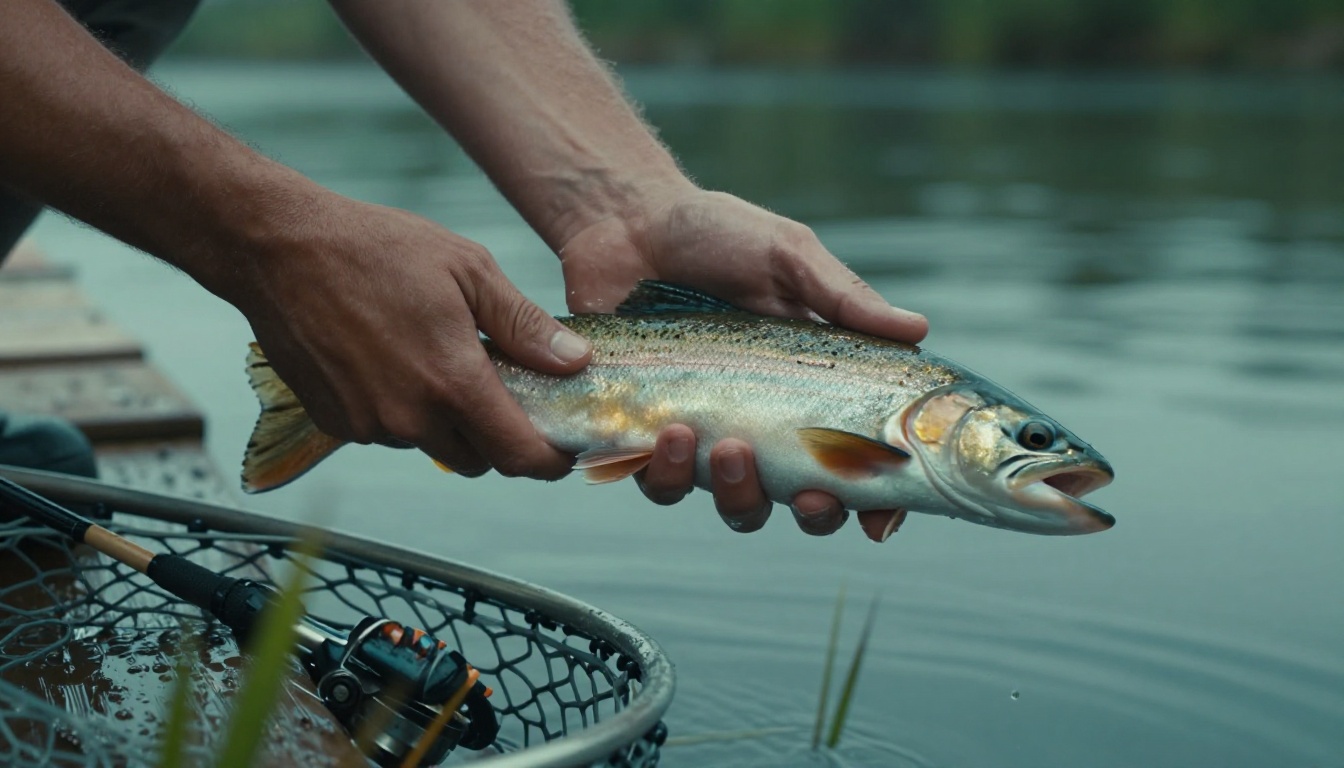
Handle the fish as little as possible, and keep your fingers away from its eyes and gills. Support its weight horizontally instead of suspending it only by the jaw or tail.
Whenever practical, leave the fish in the water during hook removal. If you want a photo, have the camera ready first and hold the fish over the water.
NOAA Fisheries’ catch-and-release brochure recommends under 60 seconds of air exposure. I treat that as a useful target, never extra time to use when the fish could stay submerged.
Release a fish with the best chance to recover
Once you’ve landed a fish, keep the release process calm and brief. My priority is reducing unnecessary handling while giving the fish enough support to recover.
Remove the hook quickly and avoid extra injury
Use pliers or a dehooking tool to remove an accessible hook gently. NOAA Fisheries recommends hook-removal devices because they can shorten handling time.
Keep the fish submerged whenever you can work safely. Position yourself so a sudden movement won’t drive an exposed hook into your hand.
Avoid repeated pulling or prolonged manipulation that tears tissue. A difficult hook placement needs care, and forcing the hook free can cause injury.
Revive the fish gently before letting go
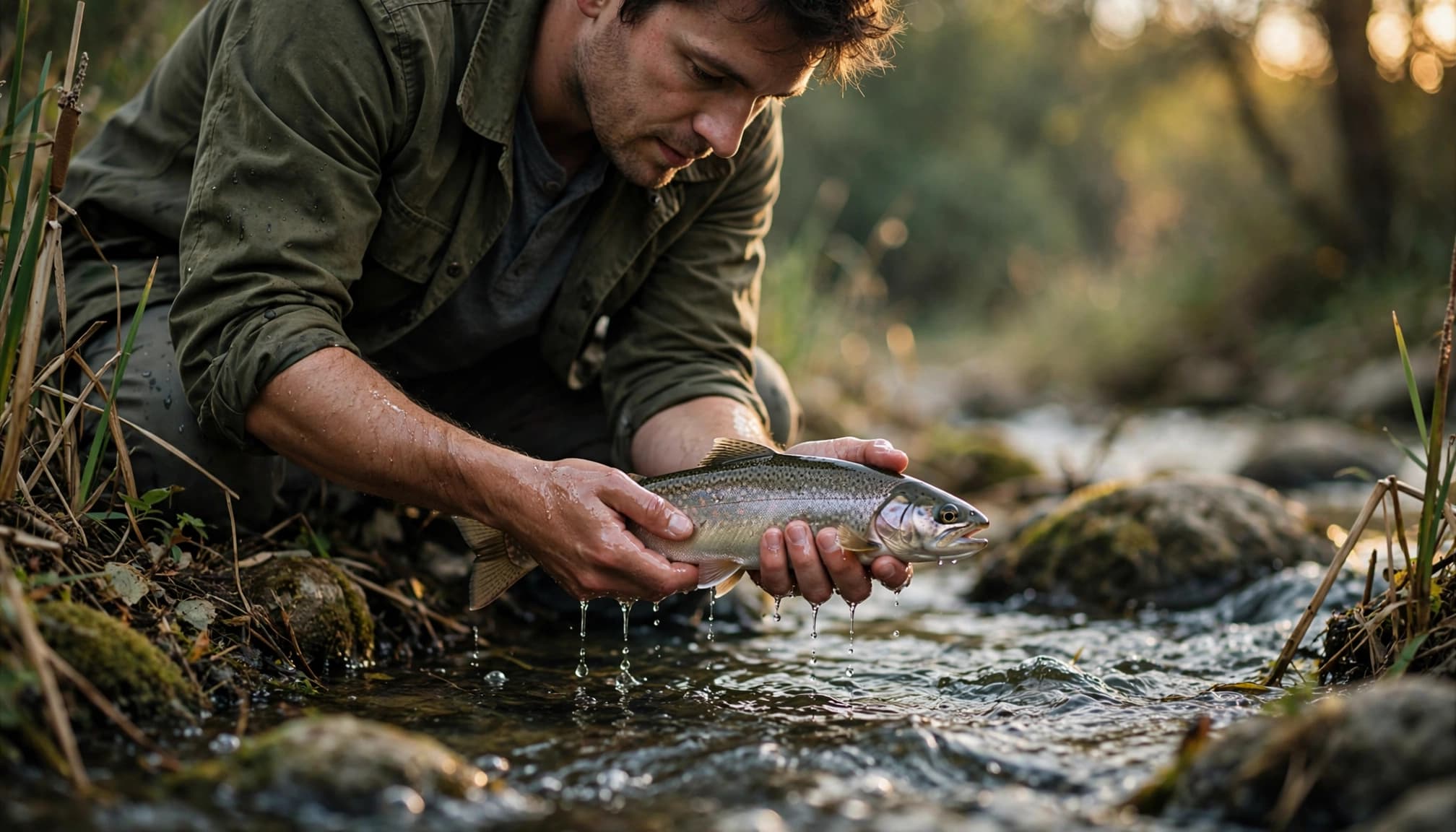
Lower the fish gently into the water rather than tossing it. If it needs support, hold it upright without squeezing its body.
Where there’s current, face the fish into the flow so water passes over its gills. Hold gently and give it time to regain balance.
Don’t rush the final release just because the hook is out. Let go once the fish can maintain its position and swim away under its own power. Don’t force it to swim.
Keep a catch fresh and protect the people who will eat it
Fish kept for food need prompt chilling and clean preparation. However, food handling and contaminant advisories address different risks, so neither replaces the other.
Chill fish promptly and prevent cross-contamination
Put a kept catch on ice promptly, and keep it cold during the trip home. Don’t leave it warm while you continue fishing.
For seafood you’ll use within two days, FDA guidance recommends refrigeration at 40°F or below. Otherwise, wrap it well and freeze it. That storage window doesn’t replace immediate chilling.
After handling raw fish, wash your hands with soap and warm water for at least 20 seconds. Wash cutting boards, utensils, dishes, and counters with soap and hot water before they touch cooked or ready-to-eat food. I recommend keeping raw fish separate throughout preparation.
Check local fish consumption advisories
Chilling controls food-storage risks, but it doesn’t tell you whether a particular catch is suitable to eat. Contaminant advice can differ by species and waterbody.
Before planning a meal around your catch, read the current state, territorial, or Tribal advisory for that exact fish and location. Follow its guidance on portions and how often to eat the fish.
I keep this separate from fishing regulations: permission to keep a fish doesn’t automatically mean unrestricted consumption is recommended.
Use a simple routine on every fishing trip
My routine for how to handle fish safely and responsibly follows the same order each trip. Before fishing, review local size, season, and possession rules, then place your hook-removal tools within reach.
When you land a fish, wet your hands and minimize contact. Support its body, keep it submerged where practical, and remove the hook gently without wasting time.
Next, release it carefully once it can swim away, or promptly ice a fish you’re legally keeping. Finally, wash your hands and clean any surfaces used for raw fish. This sequence keeps the handling, release, and food-safety decisions connected without confusing them.
Make careful handling part of every catch
Wet hands, short air exposure, and a supported body reduce avoidable harm. For fish you keep, prompt chilling and clean preparation protect the meal, while consumption advisories address risks you can’t judge by appearance.
I recommend making preparation the habit that supports everything else. Before your next trip, put your tools where you can reach them and learn the rules and advisories for the waterbody you’ll fish.