
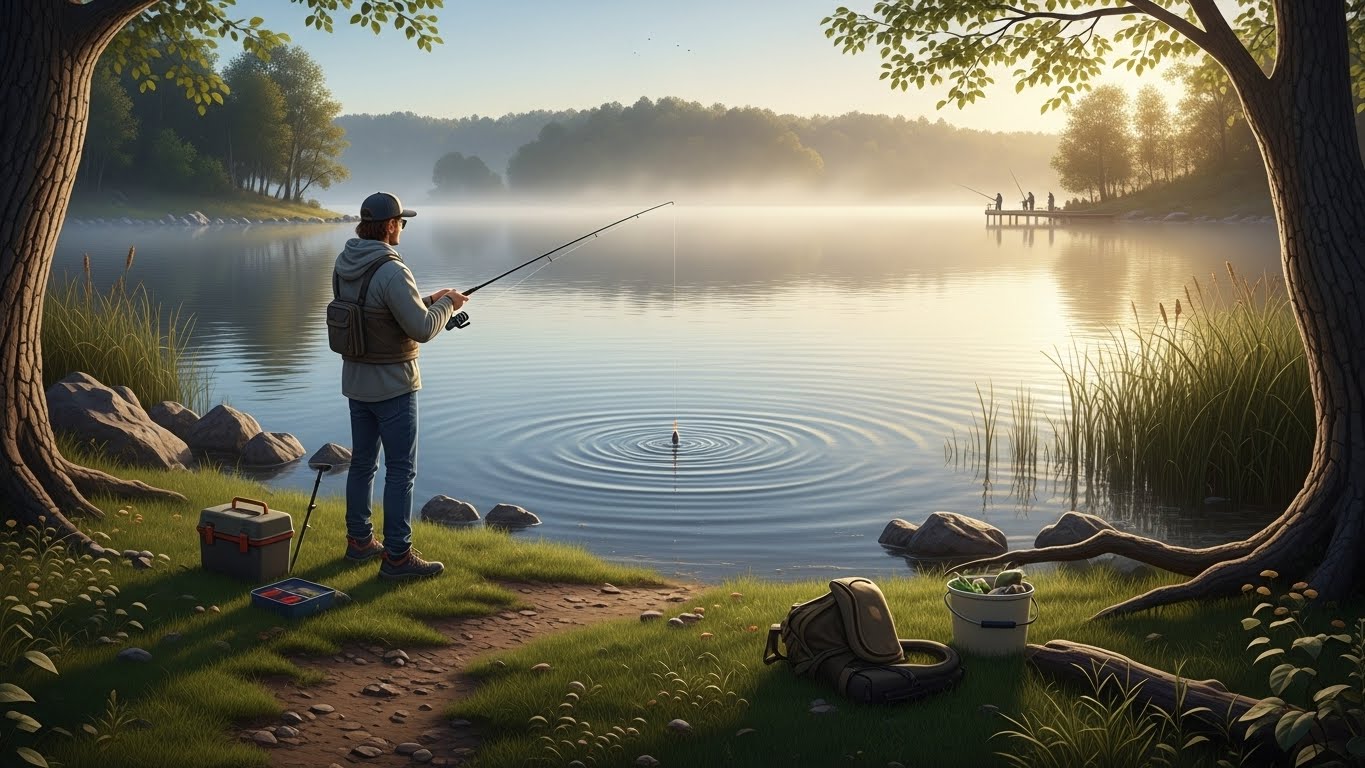
You don’t need a boat to start fishing, and that’s what makes it such an accessible hobby. This beginner-friendly location guide will help you find great spots to cast a line from solid ground and start building skills and confidence right away.
Shorelines and Riverbanks
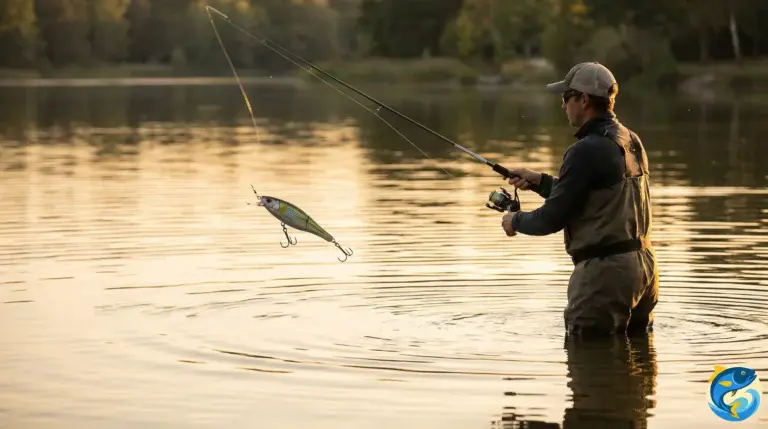
One of the easiest places to fish without a boat is right from the bank of a lake, pond, river, or stream.
- Lakes and ponds often have clear access points where you can cast from the shore, especially in public parks.
- Rivers and streams let you walk along the bank and try different spots, targeting deeper bends, current breaks, or shady areas where fish like to rest.
Piers, Docks, and Bridges
Man‑made structures can give you just enough extra reach without leaving dry land.
- Public fishing piers and docks are common in many state and county parks and often include railings, rod holders, or benches for comfort.
- Some bridges and breakwalls allow fishing and can be excellent spots, but always check local rules and be mindful of traffic and safety.
Parks, Ponds, and Community Spots
If you’re new, start where access is simple and regulations are clear.
- State and county parks often include stocked ponds, bank access, or designated fishing areas that are easy for beginners to use.
- Some areas have community or club ponds that are managed explicitly for public fishing, making it more likely you’ll get bites and build confidence.
Pay-to-Fish Facilities
In some regions, you’ll find private spots designed entirely around easy access and comfort.si
- Pay-to-fish barges, piers, or indoor “crappie houses” (common in some southern states) offer shelter, seating, bait, and restrooms for a small fee.
- These locations are great if you want less guesswork and a more structured, beginner-friendly experience.
Winter Option: Ice Fishing
In colder climates, frozen lakes can actually open up more bank‑free access.
- Once the ice is thick enough, anglers can walk out to deeper water that’s usually only reachable by boat.
- Always follow local safety guidelines and thickness recommendations before stepping onto any ice, especially as a beginner.
Wherever you choose to start—shoreline, pier, park pond, or pay‑to‑fish spot—the most important step is simply getting out there, learning the water, and enjoying the experience of fishing without needing a boat.
Are you new to the sport? Also Read Beginner’s Guide to Choosing Your First Fishing Rod and Reel
Frequently Asked Questions
Can you fish without a boat?
Yes, you can absolutely fish without a boat. Many anglers catch plenty of fish from shorelines, riverbanks, piers, and public parks that offer bank access.
Where can beginners fish from shore?
Beginners can start at local lakes, ponds, and rivers that have clear bank access, as well as public parks with fishing piers or designated shoreline areas.
Do I need special gear to fish without a boat?
No, you don’t need special gear. A simple rod and reel, basic tackle, and a small tackle box are enough to start bank or pier fishing as a beginner.
How do I find good fishing spots near me without a boat?
Check state or county parks, local fishing access maps, online angler forums, and “fishing near me” searches to locate public shore, pier, or bank fishing spots.
Is shore fishing as good as fishing from a boat?
Shore fishing can be just as productive as fishing from a boat, especially if you focus on structure, depth changes, and areas with visible baitfish or current.
Thank you for writing this. As someone without a boat, I’ve often felt like I was missing out on the “real” fishing spots. Your guide completely flips that mindset. The section on public piers, jetties, and urban fishing opportunities is a goldmine—it reminds you that great fishing is often closer than you think if you just know where to look. The safety and etiquette reminders are also much appreciated. A really positive and useful read!
Hello Cian,
It matters not where you end up fishing; it matters more that you get out there and enjoy the sport to the fullest!
Thank you for reading!
Michael