What to Ask (and Not Ask) Inside the Tackle Shop
A quiet survival guide for adults who don’t want to feel clueless their first time inside a tackle shop
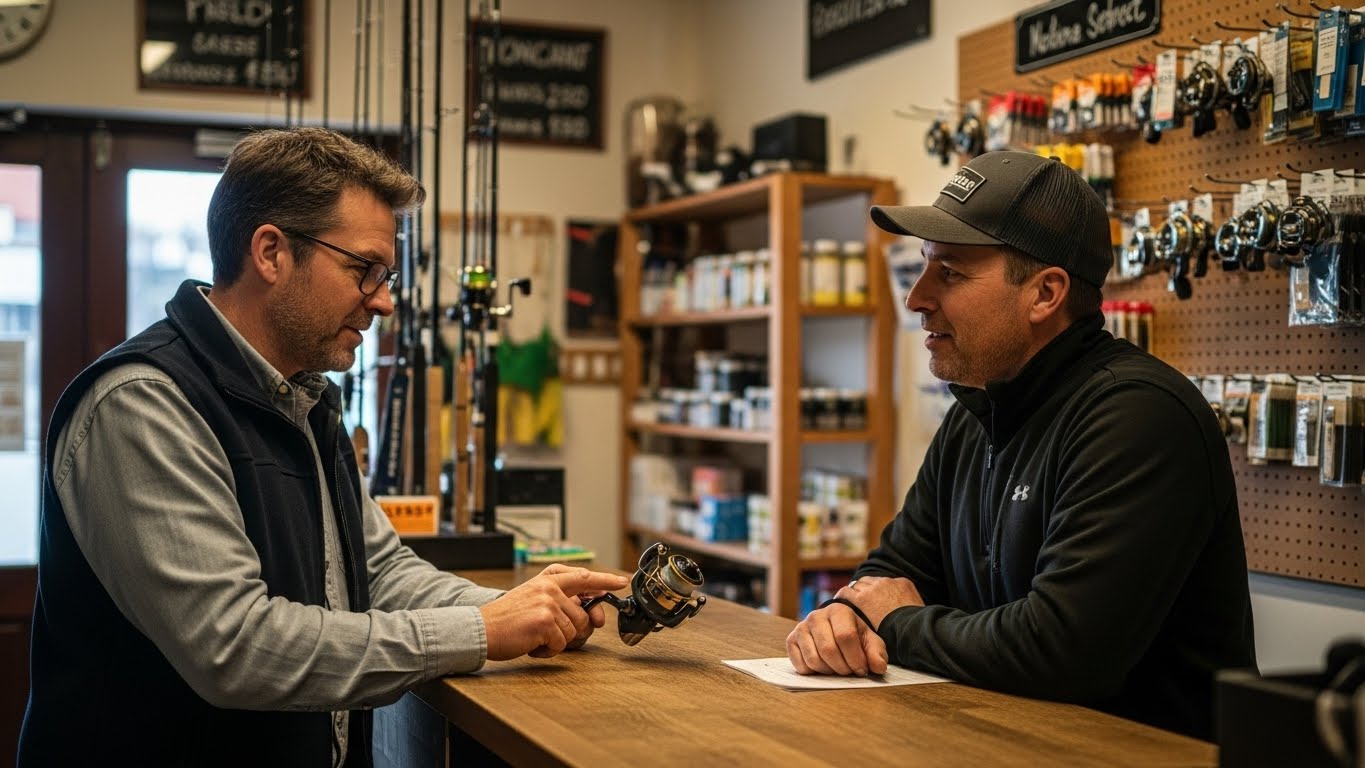
Walking into a tackle shop can feel like walking into a conversation that started years ago without you.
People behind the counter mean well. Most of them fish a lot. Some of them forget what it’s like to be new. The result is usually the same: too much information, too fast, and advice that assumes you already know what you’re doing.
This post isn’t about turning you into an expert.
It’s about helping you leave the shop with gear that works—and your confidence intact.
If you’re still deciding on your first setup, this article builds on our
Beginner’s Guide to Choosing Your First Fishing Rod and Reel, which explains how to pick a forgiving, all-around setup before you walk into the shop.
Start With What You’re Actually Doing
Before we get into what to ask, here’s the grounding principle that makes everything easier:
You don’t need to prove interest. You need usable advice.
The goal of your first few trips is simple:
- Cast without fighting the gear
- Fish without second-guessing every decision
- Learn by doing, not fixing problems
Everything you say in the shop should point toward that.
The Best Questions to Ask (And Why They Work)
“I’m just getting started. I want a spinning setup that works in most places.”
This sentence does a lot of work.
It tells the staff:
- You’re new
- You want versatility
- You’re not shopping for a specialized setup
It also prevents the conversation from drifting into technique rabbit holes you don’t need yet.
If they respond with calm clarification questions, you’re in good hands.
“What reel do you see beginners come back happy with?”
This question shifts the focus from specs to experience.
You’re not asking for:
- The most sensitive
- The most advanced
- The one they personally prefer
You’re asking which reel causes the fewest early problems.
That’s precisely what you want.
“Is this something I can use from shore or a dock?”
This brings the conversation back to reality.
Boat-specific gear is standard. You want equipment that works without one. This question keeps recommendations grounded in how you’ll actually fish.
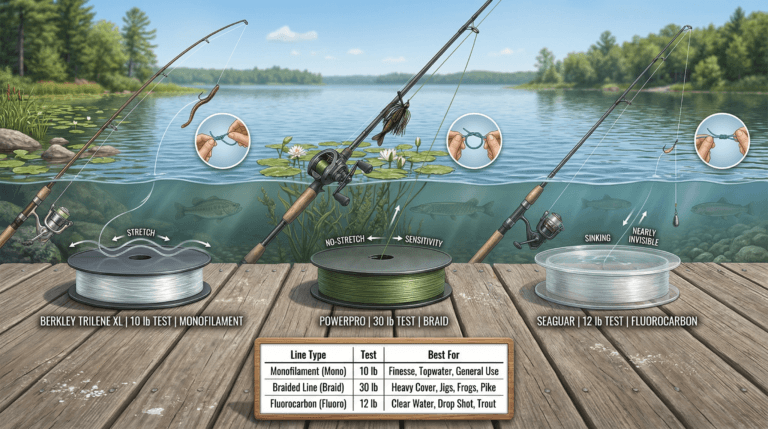
“What line would you put on this if it were yours?”
Line choice causes more early frustration than rods or reels, yet it’s often treated as an afterthought.
This question invites practical advice without turning technical. You’ll usually get a straightforward answer—and often a free spool-up.
Questions That Sound Reasonable but Work Against You
These aren’t “bad” questions. They’re just premature.
“What’s the best rod for bass?”
This assumes:
- You’ll only catch bass
- You’ll only fish one way
- You already know where and how you’ll fish
Early on, versatility beats species targeting. This question narrows the conversation too soon.
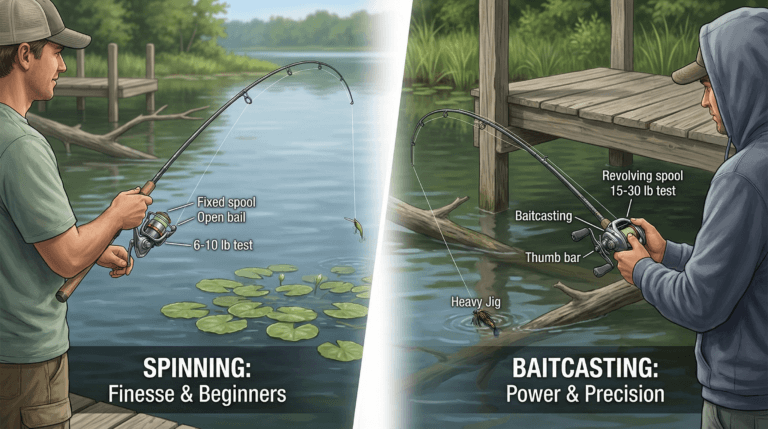
“Should I get a baitcaster or spinning reel?”
This often triggers a demonstration instead of advice.
If you’re new, the answer is usually spinning. But asking this invites debate, opinions, and sometimes pressure. You already know what you’re there for.
State it. Don’t ask it.
“What do most people buy?”
This can lead anywhere.
Sometimes it means “what’s popular.” Sometimes it means “what’s on sale.” Neither guarantees the gear suits you.
What most people buy isn’t the same as what beginners stick with.
How to Tell If You’re Getting Good Advice
You don’t need to judge expertise. Just watch the direction of the conversation.
Good advice:
- Comes back to how and where you’ll fish
- Explains tradeoffs without pushing upgrades
- Makes fewer assumptions as the conversation goes on
Poor advice:
- Escalates quickly into specialization
- Focuses on brand loyalty over use
- Treats complexity as a selling point
You’re allowed to slow the conversation down. You’re also allowed to leave.
One Last Thing Most People Forget
You’re not behind.
Fishing isn’t a ladder. There’s no entry test. Most anglers learned by trial and error, quietly figuring things out over time.
- The tackle shop is a tool.
- Use it the same way you use your gear: for support, not pressure.
FAQ: What people really ask at a tackle shop (rods and reels)
If you’re buying your first rod and reel, these are the questions that get you clear answers fast. They keep the conversation practical and help you avoid walking out with gear that doesn’t fit how you’ll actually fish.
What should I say if I’m new and I don’t want a long lecture?
Try this: “I’m just getting started. I want a spinning setup that works in most places.”
It tells them you want something versatile, and it keeps the advice focused on gear that’s easy to learn on.
Should I get a spinning reel or a baitcaster as a beginner?
For most beginners, start with a spinning reel. It casts more easily and is easier to manage while you learn.
Baitcasters can be great later, once you’ve built basic casting control and you know what styles of fishing you like.
What reel size should I buy for a “works almost anywhere” setup?
For general freshwater, a 2500 or 3000 size spinning reel is a solid starting point.
- 2500: light, comfortable, still versatile
- 3000: a bit more capacity and leverage if you fish bigger water
What rod length and power should I choose if I’m fishing whatever’s closest?
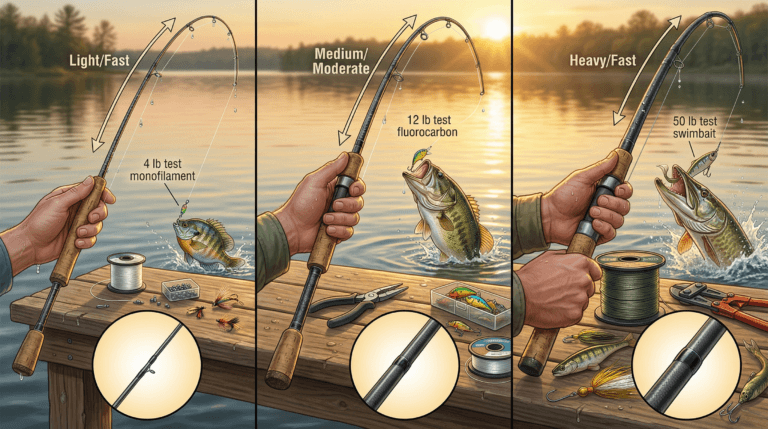
A 6’6” to 7’ medium-power rod is a dependable “do most things” choice for beginners.
If space is tight (brush, small creeks, short docks), lean 6’6”. If you want a bit more casting distance, lean 7’.
Is it true I should spend more on the reel than the rod?
Often, yes. A smooth reel makes casting and retrieving feel consistent, and that matters early.
A basic rod can still fish well. A poor reel can make everything harder than it needs to be.
What’s the easiest line choice if I don’t want to think about it?
Ask them to spool it with 8–12 lb monofilament. It’s simple, forgiving, and works across many situations.
If you choose braid later, ask about adding a leader and how to tie the connection knot.
How do I know if a reel is “good enough” while I’m holding it?
Do three quick checks:
- Turn the handle slowly. It should feel smooth, not gritty.
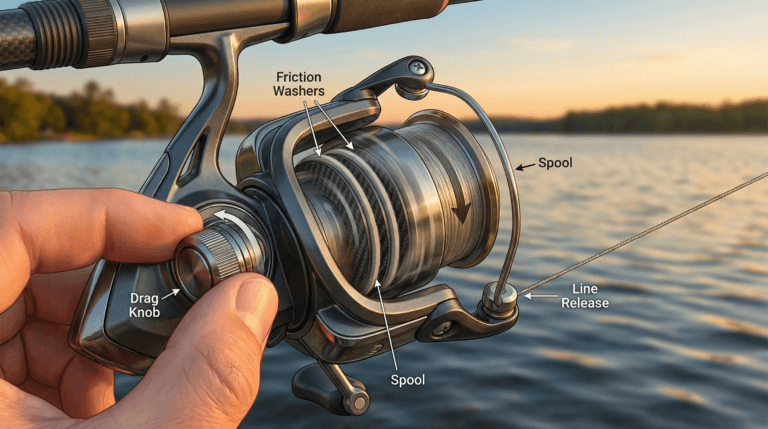
- Adjust the drag. It should tighten and loosen predictably.
- Open the bail and close it. It should feel solid, not flimsy.
Do I need a combo, or should I buy rod and reel separately?
Combos can be fine if the reel is decent and the setup matches how you’ll fish.
If you can, pick the reel first and pair a rod to it. That usually gets you a smoother experience from day one.
What should I ask the shop to do before I leave?
Two helpful requests:
- “Can you spool the line for me?”
- “Can you show me how tight the drag should feel?”
Those two things prevent most first-day headaches.
How do I avoid buying the wrong rod for my local water?
Tell them where you’ll fish: pond, river, lake, dock, pier, or shoreline.
Then ask: “What do people catch there most often, and what setup holds up best for that mix?”
What’s one question that usually leads to better recommendations?
Ask: “What do you see beginners come back happy with?”
It shifts the answer from theory to real-world outcomes.
What should I not say if I want to avoid being upsold?
Avoid vague prompts like “What’s the best setup?” or “What do most people buy?”
Instead, state your goal: “I want a spinning setup that’s easy to learn and works in most places.”
This is one of the most practical, down-to-earth guides I’ve ever read—thank you! As someone who felt that exact “clueless” anxiety walking into a shop, your framing is perfect. The distinction between “What most people buy” vs. “What beginners stick with” is a brilliant insight that cuts through the noise. The suggested opener (“I’m just getting started. I want a spinning setup that works in most places.”) is going straight into my notes. This isn’t just fishing advice; it’s a masterclass in how to ask for help in any specialized field.
In a way, you can be a total noobie without sounding like a noobie!
Asking the right questions will get you much further than just winging it as you go in.
Thanks for reading!
Michael