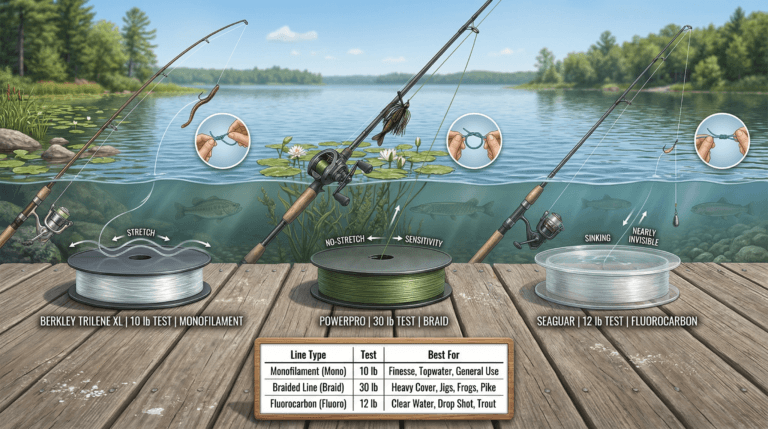
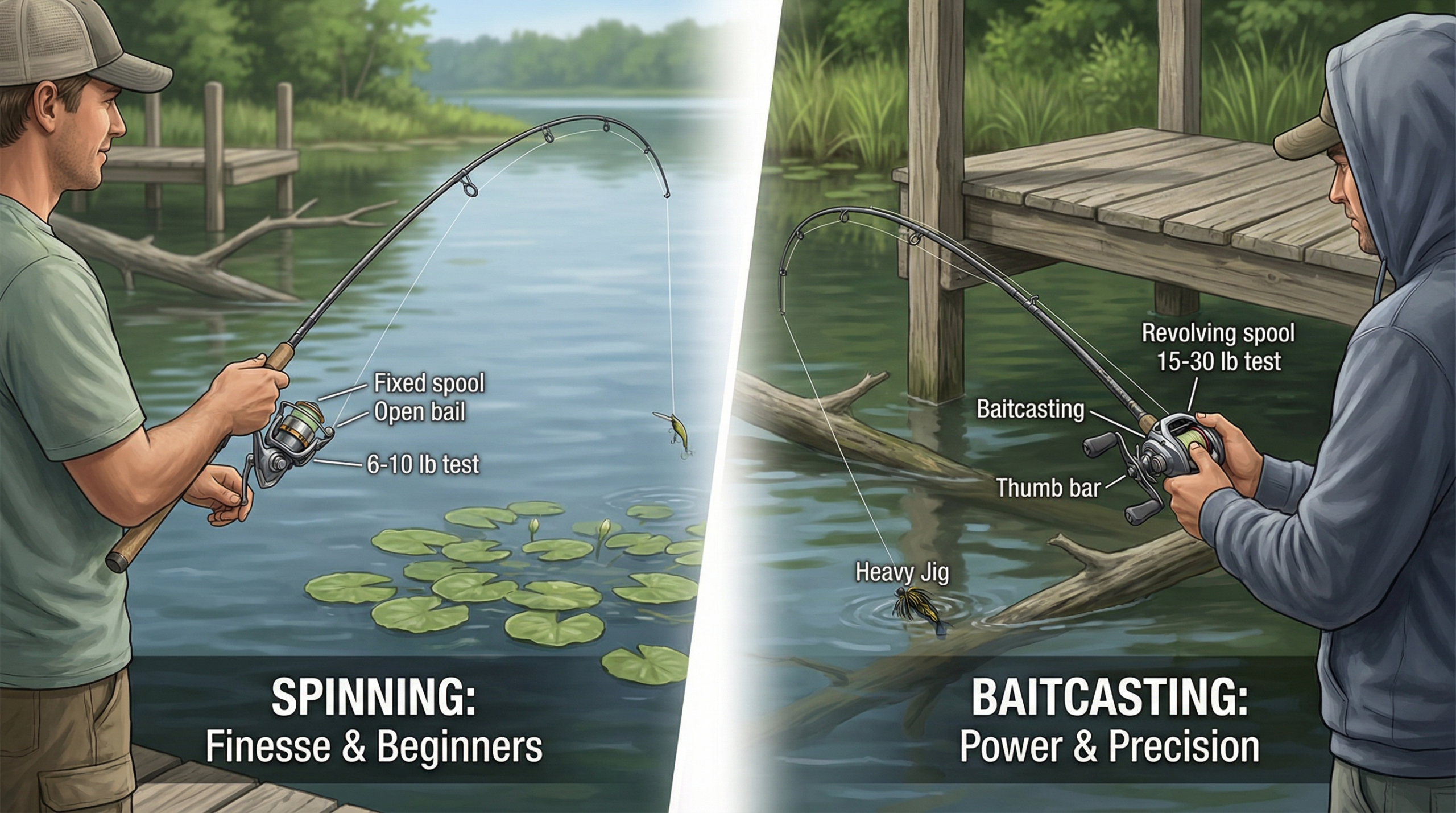
Spinning and baitcasting reels both catch fish, but knowing when to switch from one to the other can save you frustration, line breaks, and missed strikes. Spinning reels shine for beginners and light lines, while baitcasters unlock heavier power and accuracy, but only when conditions demand it.
Spinning Reels: Your All-Purpose Starter
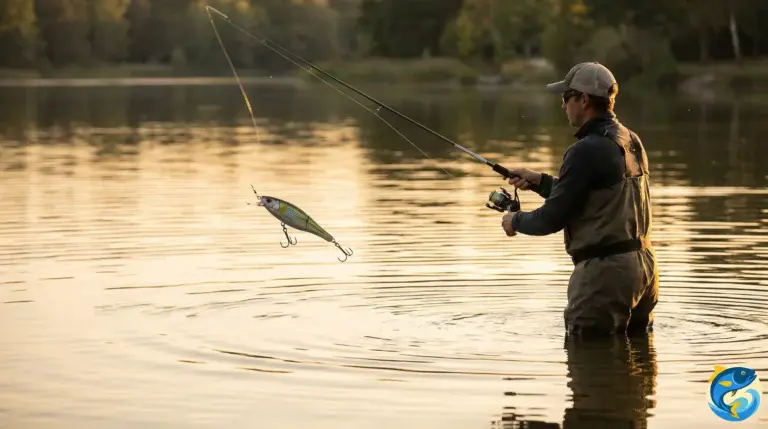
Spinning reels cast line from a fixed spool using a bail, making them nearly foolproof.
- Perfect for beginners because they rarely backlash or tangle.
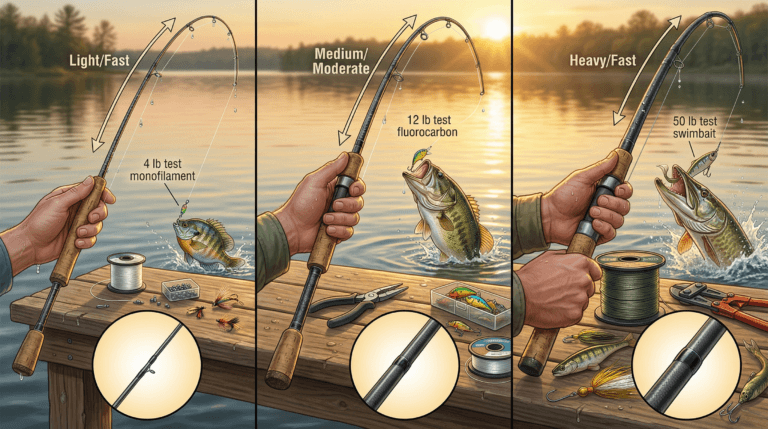
- Handle light lines (2-12 lb test) and finesse techniques such as drop-shotting or using small lures.
- Excellent for panfish, trout, walleye, and inshore saltwater on lighter tackle.
The trade-off: less power for big fish and reduced casting distance with heavier lures.
Affiliate Disclosure
Some links on Angler Supply Guide are affiliate links. If you click a link and make a purchase, we may earn a commission at no extra cost to you.
As an Amazon Associate I earn from qualifying purchases.
We only recommend products we believe are useful for anglers. Product prices and availability are subject to change. Any price and availability information displayed on Amazon at the time of purchase will apply to the purchase of that product.
Baitcasting Reels: Power When You Need It
Baitcasters use a revolving spool and thumb control for pinpoint casts, built for heavy cover and big game.
- Excel with heavier lines (12-65 lb test) and lures over 1/4 oz.
- Superior drag strength and control for bass, musky, redfish, or anything pulling hard.
- Longer, more accurate casts once mastered—but prone to “bird’s nests” if your timing’s off.
When Switching Actually Makes Sense
Stick with spinning if:
- You’re new, or you are teaching kids (forgiving and easy).
- Targeting smaller species or using finesse tactics.
- Fishing in tight spaces or windy conditions where control matters more than distance.
Switch to baitcasting when:
- Chasing trophy fish that demand max drag power.
- Throwing heavy swimbaits, jigs, or frogs through thick vegetation.
- Need surgical accuracy around docks, laydowns, or skipping under overhangs.
The real trigger? When your spinning setup starts feeling underpowered—line stretches too much, drag slips early, or casts fall short on heavier gear. Test both, but don’t rush the switch until you’re ready to manage the learning curve. Your catch rate will thank you.
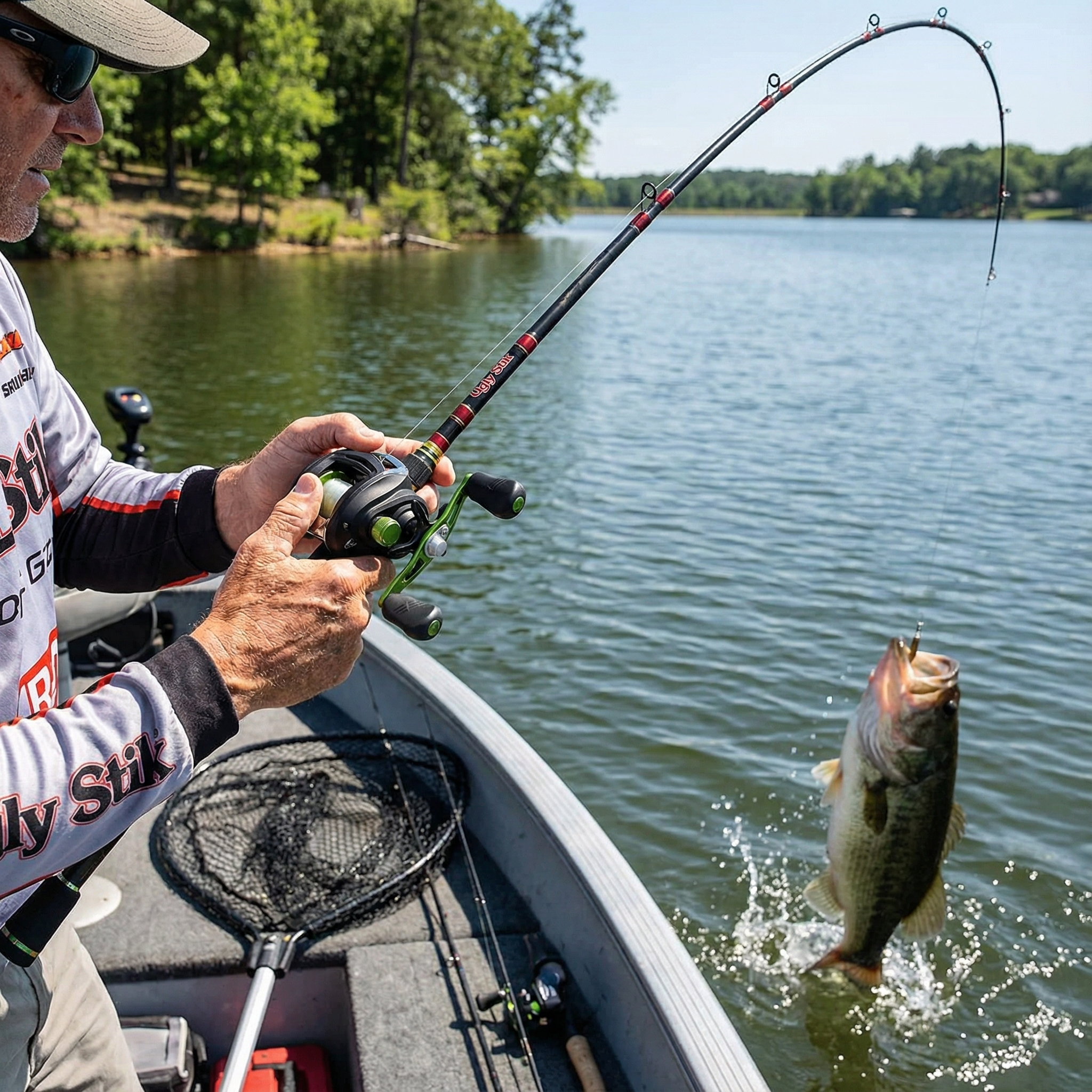
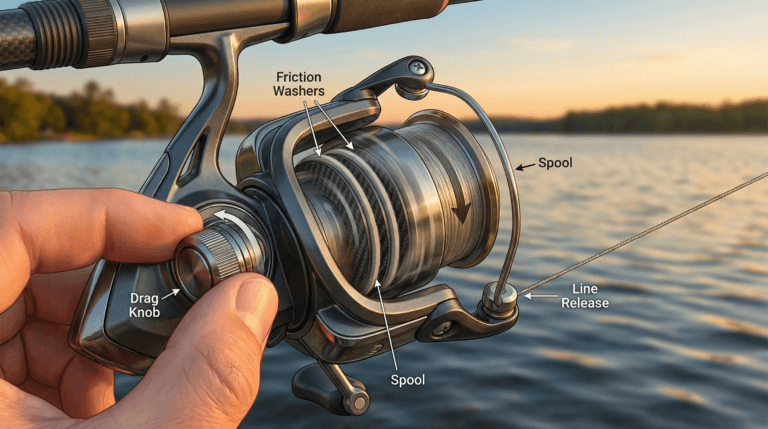
HIGH PRECISION BRAKING SYSTEM – Magnetic brake system to ensure stable performance. The unloading knob with a scale and multi-gear brake force can accurately and efficiently handle different fish conditions.
Also read- Beginner’s Guide to Choosing Your First Fishing Rod and Reel
FAQ: Spinning vs baitcasting reels
Is a spinning reel better than a baitcaster for beginners?
For most beginners, yes. Spinning reels are easier to cast and manage because they rarely backlash. They’re a better way to learn basics like casting, retrieving, and setting drag without fighting your equipment.
When should I switch from a spinning reel to a baitcasting reel?
Switch when your spinning setup starts feeling underpowered—usually when you’re throwing heavier lures, fishing thicker cover, or needing more drag strength and control than your spinning reel comfortably provides.
What’s the biggest advantage of a baitcasting reel?
Power and control. Baitcasters handle heavier line well, provide strong drag performance, and can deliver more accurate casts once you’re comfortable with spool control.
What causes a baitcaster “bird’s nest” and how do I avoid it?
A backlash happens when the spool spins faster than the lure pulls line. To reduce it, start with the brakes higher, tighten spool tension a bit, use slightly heavier lures, and practice with short, smooth casts until thumb control develops.
What line weights fit spinning reels vs baitcasters?
Spinning reels typically shine with lighter lines (often around 2–12 lb test). Baitcasters are commonly used with heavier lines (often around 12–65 lb test), especially for cover, big fish, or heavier lures.
Do baitcasters cast farther than spinning reels?
It depends on the lure weight and your technique. Spinning reels often win with light lures. Baitcasters can perform extremely well with heavier lures once tuned correctly, especially when accuracy matters more than maximum distance.
Can I use the same rod for spinning and baitcasting reels?
Not ideally. Spinning rods and baitcasting rods are built differently (guide size and placement, reel seat, and trigger grip). You can force it in a pinch, but performance and comfort usually suffer.
What’s a simple sign my spinning setup is “not enough” anymore?
If heavier lures feel awkward, your casts start falling short, your drag feels maxed out too early, or you’re constantly fighting line stretch and control around cover, you’re getting into baitcaster territory.
Is spinning or baitcasting better in wind?
Many anglers find spinning reels more forgiving in wind, especially with lighter lures. Wind can amplify backlash risk on a baitcaster, particularly if the reel isn’t tuned well or the lure is light.
Should I buy a baitcaster right away to “learn faster”?
Only if you’re committed to practicing through the learning curve. Most people learn faster overall by starting with spinning, catching fish sooner, then switching when they have a real reason to use baitcasting power and accuracy.