

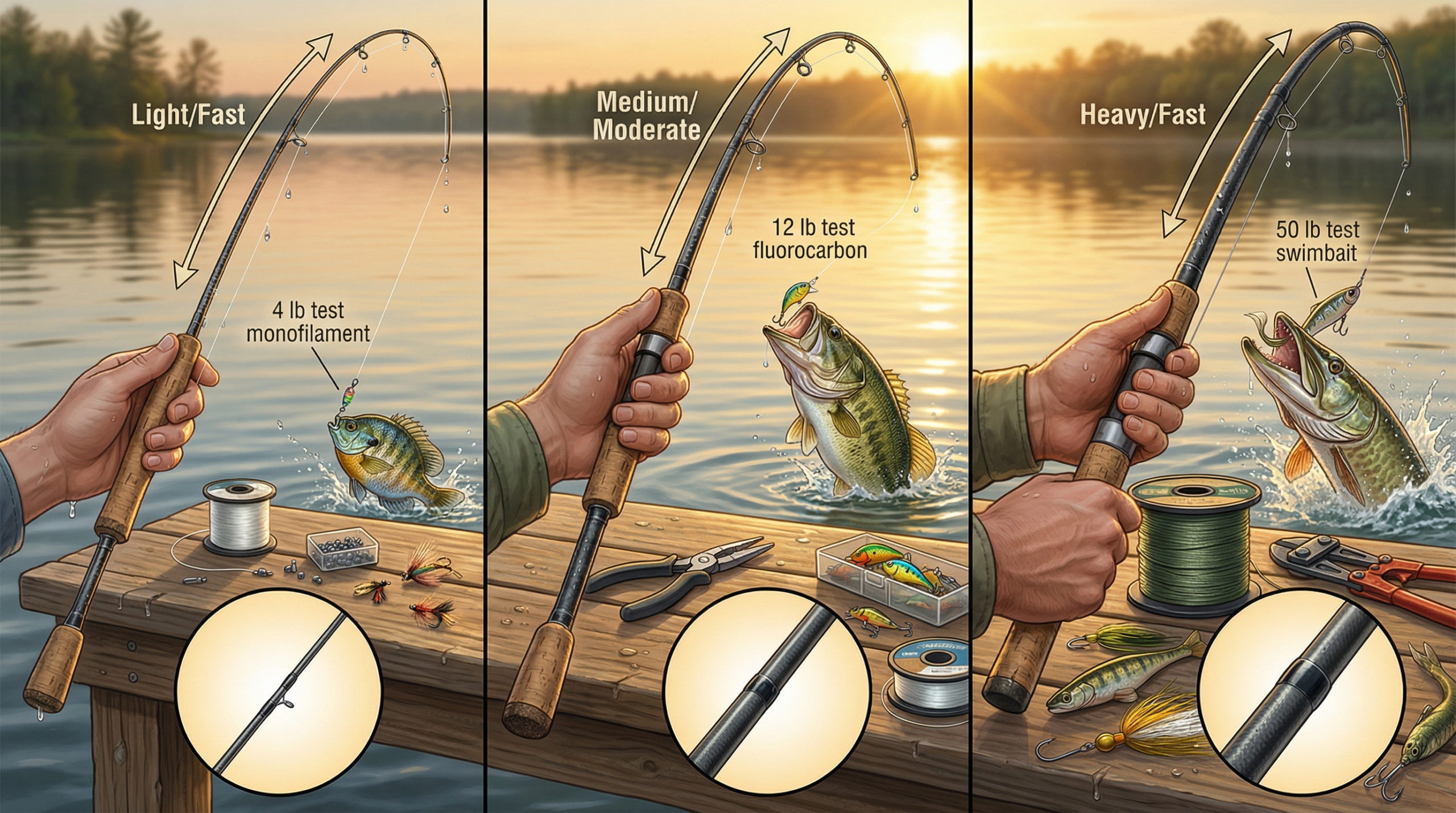
Rod power and action ratings can feel like secret code on fishing rods, but they’re really just simple descriptions of how stiff or bendy the rod is, and how that helps match your rod to fish, lures, and techniques. No charts needed; think of power as the rod’s overall strength and action as where it bends.
Rod Power: How Much Muscle
Power tells you the rod’s backbone strength for handling line weight and fish size.
- Light/Ultralight power: Thin, sensitive rods for small fish like trout, panfish, or finesse tactics with 2-8 lb line. Feels like a fly rod—whippy but precise.
- Medium power: Your all-purpose workhorse for bass, walleye, or inshore saltwater with 8-15 lb line. Balances casting, hooksets, and fighting.
- Heavy power: Beefy rods for big game like musky, redfish, or catfish using 20-65 lb line. Built for cranking hard against powerful runs.
Rod Action: Where It Bends
Action describes the rod’s flex pattern from tip to butt.
- Fast action: Stiff, bends mostly in the top third. Quick hooksets through heavy cover, excellent for jigs, worms, or single hooks. Less forgiving on light bites.
- Moderate action: Bends in the middle half. Sweeter for cranking baitcasters or topwater where you want some “parabola” cushion on the fight.
- Slow action: Deep, parabolic bend from tip to grip. Best for light lines, float fishing, or techniques needing maximum shock absorption.
Match to Your Fishing
Pair power/action to what you’re chasing:
- Finesse bass or trout? Light/medium, fast, or moderate.
- Flipping jigs into brush? Medium-heavy, fast.
- Crankbaits or trolling? Medium, moderate.
- Big swimbaits or saltwater? Heavy, fast.
Feel the rod in your hand at the store, flex it, and cast it if you can. The right combo fights fish with you instead of against you, landing more keepers without snapped lines or pulled hooks.
Learn more about reels- Beginner’s Guide to Choosing Your First Fishing Rod and Reel