How to Read Wind on a Pond or Small Lake
Most people treat wind like a problem to fight. Tangled lines, drifting kayaks, hats trying to leave your head. I get it.
But on a pond or small lake, wind is often the closest thing you have to “current,” and current is food movement. Once you start read wind fishing the right way, you stop casting at water and start casting at a food line.
An example using saltwater. It’s just a simple chain reaction: wind moves surface water, surface water moves plankton, plankton pulls baitfish, and baitfish pull predators.
What the “pushed” food zone really is (and why fish care)
A pushed food zone is the downwind area where wind-driven surface drift stacks up tiny food. On small water, it doesn’t take much. A steady breeze can turn a dead-looking bank into the only bank that matters.
Here’s the basic idea:
- Wind pushes the top layer of water toward the downwind shore.
- That drift carries plankton and small bugs with it.
- Minnows and small panfish slide in to feed.
- Bass, pike, and bigger predators set up where the bait has to pass.
Sometimes it’s a wide band, like a whole shoreline. Other times it’s a narrow “lane” that forms when the wind hits something, like a point or a little cut in the bank. If you’ve ever seen shad dimpling on the windy side while the calm side looks empty, you’ve already seen it.
One more thing people skip: wind also adds oxygen and breaks up bright light. Fish often get more willing to roam, and they’ll use that chop like cover.
How to read wind on the water (not on an app)
Weather apps help, but ponds are sneaky. Trees, hills, and houses bend wind in weird ways. I’ve watched flags on one side of a pond hang limp while the far bank has whitecaps.
A quick, practical read looks like this:
Look at the surface texture first. The windward side (where wind is coming from) usually looks smoother. The downwind side shows tighter ripples, little wavelets, and sometimes foam streaks.
Watch for “drift lines.” Pollen, scum, floating grass, and tiny bubbles collect in streaks. Those streaks are conveyor belts. If you find one that ends near cover, it’s worth a few casts.
Check the bank itself. On the windblown shore, waves slap and roll. That knocking sound is a clue, it’s stirring up bottom muck in the shallows and washing insects loose.
If you only do one thing, do this: stand still for 30 seconds and watch what’s moving. Wind tells on itself.
Find the windblown bank, then zoom in to the best spots
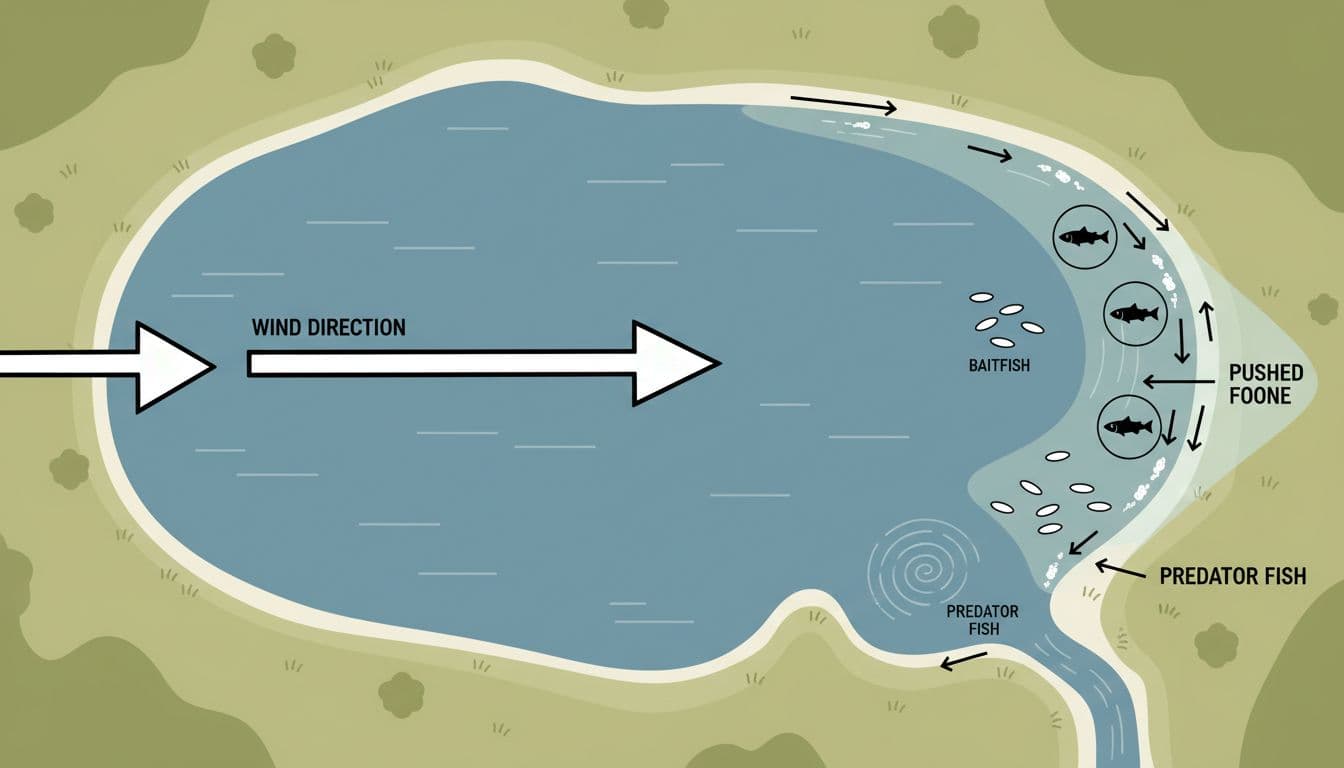
Start broad: identify the downwind shoreline. On many ponds, that’s 50 to 70 percent of your decision right there.
Then zoom in. Wind pushes food everywhere, but it piles it up best where the shoreline shape interrupts flow:
Points: A point acts like a rake. Water and plankton slide along it, then peel off. Baitfish often bunch up on the downwind side or at the tip, depending on how hard it’s blowing.
Coves and pockets: A small indentation can form a soft “swirl” where food stalls out. It’s not always obvious, but floating bits will hang there longer.
Inlets, drains, and culverts: Even a trickle adds direction and scent. Combine that with wind drift and you get a double push. These spots can be absurdly good, especially after rain.
Weed edges and docks on the windy bank: Wind pushes bait into the cover, predators wait on the outside edge. It’s simple ambush math.
I’ll say it plainly: if you’re fishing the calm, pretty side because it’s comfortable, you might be fishing the empty side.
Positioning and casting angles that keep you in the zone
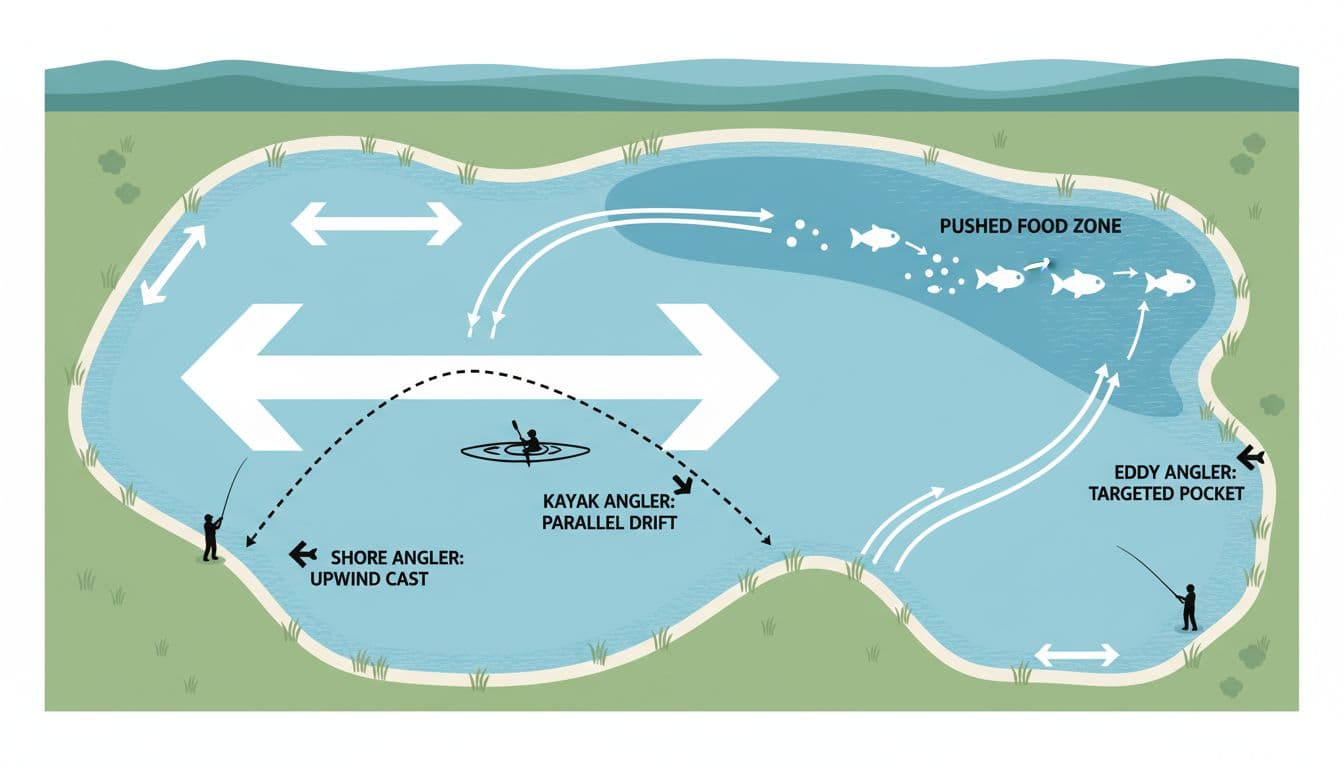
On small water, your angle matters as much as your lure. The pushed zone is often a skinny strip. You want your bait in it longer.
Shore fishing tip: Don’t stand in the dead center of the windy bank and cast straight out all day. Mix in a 45-degree cast upwind so your lure travels with the drift, then make a few casts parallel to the bank to keep it in the band.
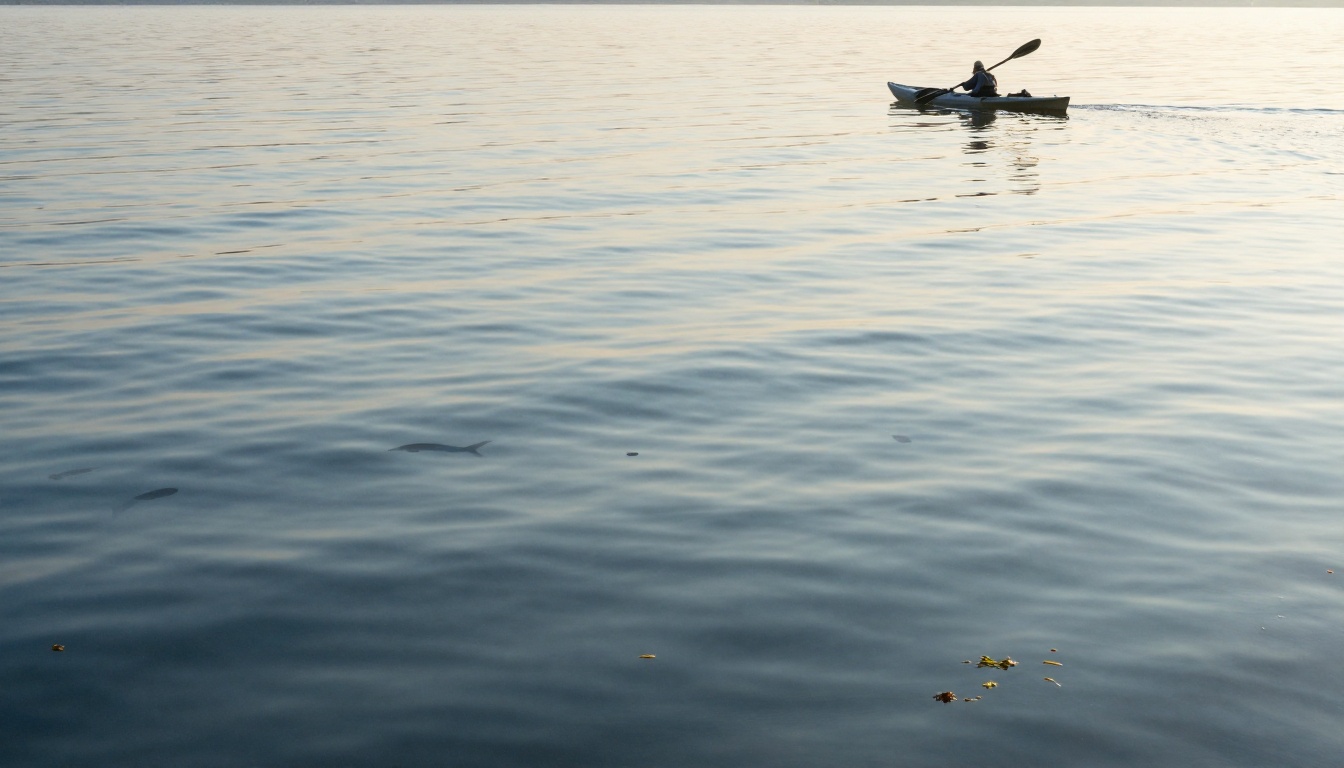
Kayak or small boat tip: If it’s safe, set up so you can drift slowly with the wind while casting ahead of the drift. It feels lazy, but it’s efficient. If you fight the wind with constant paddling, your presentation gets sloppy (and you get tired).
Target the “endpoints.” If a drift line runs into a dock corner, a laydown, or the mouth of a pocket, treat that like a little feeding station. Fish don’t have to chase much there.
A small caution: on ponds, wind can push you onto shallow flats fast. I’ve grounded a kayak more than once while staring at a riprap bank like it owed me money.
When wind shifts, the food zone shifts (sometimes fast)
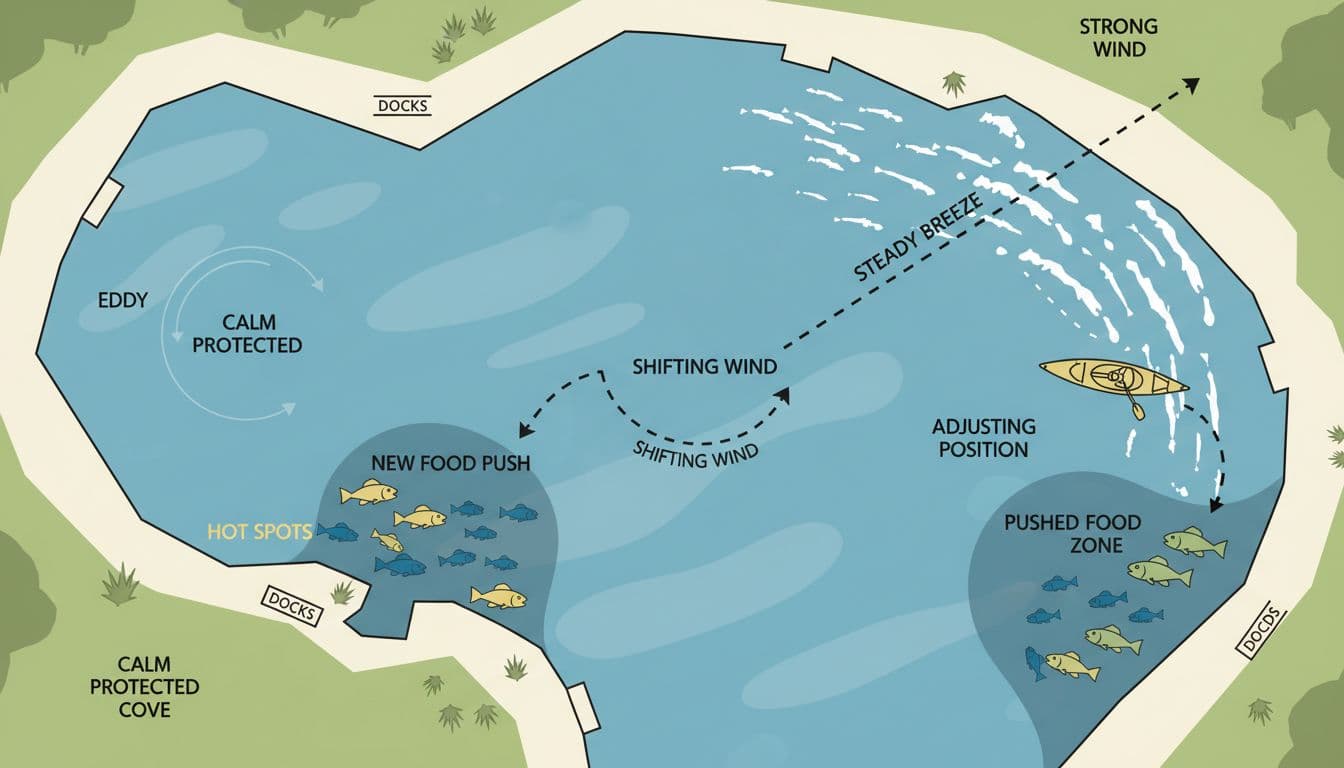
A steady wind is easy. A shifting wind is where people get confused, and honestly, where you can separate yourself.
If the wind swings 90 degrees, that pushed band starts rebuilding on a new bank. It might not happen instantly, but it doesn’t take hours either on a small pond. If you notice the ripples changing and the floating junk drifting a new direction, believe it.
Also, don’t ignore protected pockets. Behind a point or inside a cove, wind can create an eddy. Food circles there instead of sliding down the bank. Those places feel calm, but they can still be “wind-fed.”
If the wind dies completely, I usually downsize and slow down. The buffet line just stopped moving.
Match your lure and retrieve to the wind (keep it practical)
Wind strength doesn’t just pick your spot, it should shape your presentation. You don’t need a thousand baits, but you do need the right speed and feel.
| Wind level | What the water looks like | Reliable lure styles | Simple retrieve cue |
|---|---|---|---|
| Light breeze | Small ripples, drifting pollen | Weightless soft plastic, small spinner, finesse jig | Slow, with pauses |
| Moderate | Steady chop, visible drift lines | Spinnerbait, chatterbait, swim jig, squarebill | Medium, keep contact |
| Strong | Whitecaps, hard push into bank | Heavier spinnerbait, lipless crank, compact jig | Faster, tighter to cover |
A couple small habits help more than fancy gear:
Keep your line under control. Wind bow in the line hides bites. Lower your rod tip, and use slightly heavier weight if you have to.
Aim for “natural drift.” Even with a moving bait, try to make it travel the same direction as the surface push, at least part of the time.
Conclusion: follow the push, and the pond starts making sense
When you read wind on a pond or small lake, you’re really reading where the groceries are going. Find the windblown bank, then pick apart points, pockets, and inlets that trap that drift.
If you leave with one rule, make it this: fish where the wind is feeding water, not where it’s comfortable. Next trip, spend five minutes watching the surface before you cast. That small pause can change the whole day.
If you prefer the tech, then check out this handheld, BTMETER BT-846A Pro HVAC Anemometer
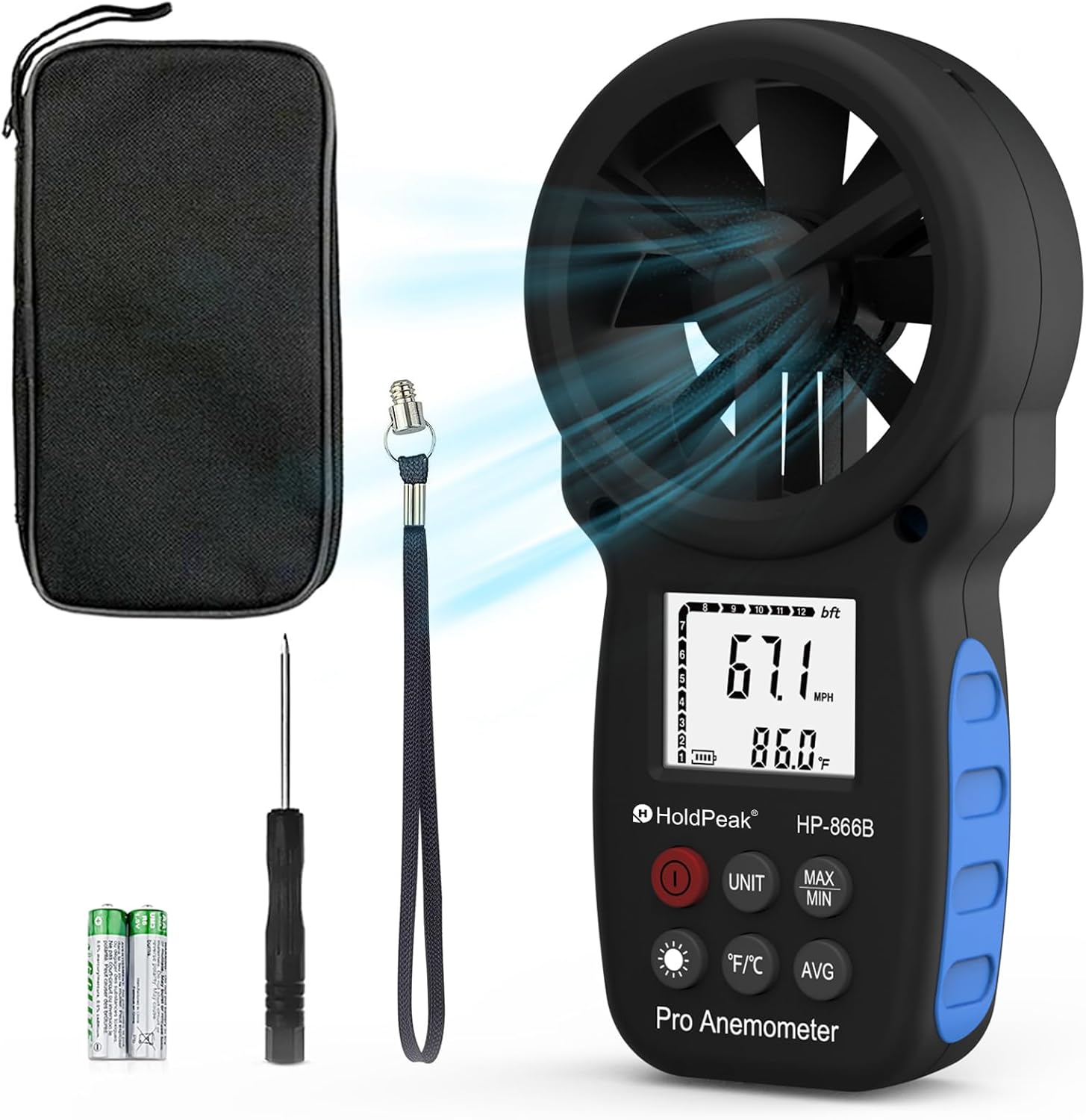
Professional & Multifunctional – This Pro wind speed meter has functions such as: unit switching of wind speed(m/s, km/h, ft/min, knots, mph) and wind temp(℃,℉), Max/Min/Average Wind Speed, battery level display, auto off, backlight, etc. Which can meet various measuring demands.