
Pond bass don’t live in a big, open world. They live in tight lanes, under overhangs, along weed edges, beside dock posts, and in little shade pockets that can be the size of a dinner table. Your fishing line pond bass setup matters because it’s the one thing that touches everything: your lure action, your hookset, and whether that fish makes it through the junk and into your hand.
The good news is you don’t need a dozen spools to get this right. A few simple rules will cover most pond situations, and you can adjust from there. I’ve changed my mind on line plenty of times mid-season, and that’s normal. Ponds have moods.
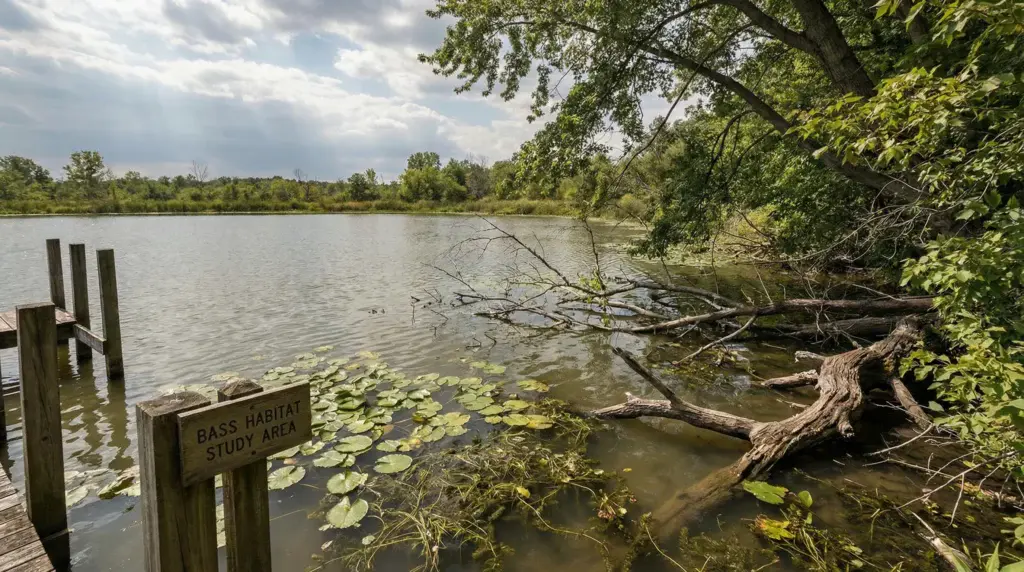
Start with the pond: cover, clarity, and how your lure needs to act
Before picking braid, fluoro, or mono, look at what’s going to beat up your line and what the bass are likely to notice.
Cover is the first filter. If the pond has thick weeds, matted algae, lily pads, or shallow laydowns, you need line that can cut and pull. If it’s mostly open bank with a few brush piles, you can fish lighter and cleaner.
Water clarity is the second filter. Clear ponds can make bass line-shy, especially on calm days. Stained ponds (which is a lot of ponds) forgive you. Muddy ponds often reward stronger line because bites come close and fish bury fast.
Lure style is the third filter. Some lures need stretch, some hate it.
- Topwater usually likes a floating line (mono is friendly here).
- Bottom contact (worms, jigs) usually likes low stretch and sensitivity (fluoro or braid with a leader).
- Treble hook baits (cranks, jerkbaits) often fish better with a little give (mono, sometimes fluoro if you’re careful).
Here’s a quick cheat sheet I actually follow when I’m not overthinking it:
| Pond scenario | Best starting line | Why it works | Typical starting strength |
|---|---|---|---|
| Heavy weeds, frogs, punching | Braid | Saws through vegetation, strong hooksets | 40 to 65 lb |
| Weightless plastics around light cover | Braid + leader or fluoro | Easy casting, solid hooksets | 10 to 20 lb braid (leader 8 to 12 lb) |
| Jigs, Texas rigs, rocky edges | Fluorocarbon | Abrasion resistance, good feel | 12 to 17 lb |
| Popper, walking bait, small buzzbait | Monofilament | Floats, won’t drag the nose down | 10 to 15 lb |
| Small crankbaits, trebles near bank | Mono (or lighter fluoro) | Forgiving on surges, fewer pull-outs | 8 to 12 lb |
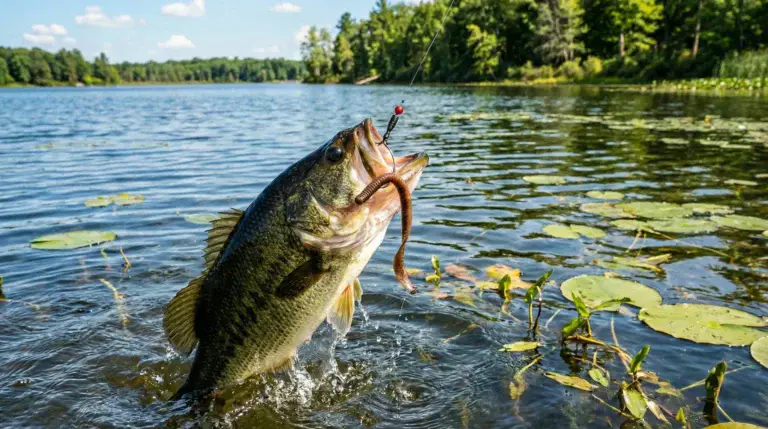
If you’re stuck, choose based on cover first. Pond bass love to head straight into the worst stuff. They don’t “run,” they bulldoze.
Braid for pond bass: the simple rules (and the few times it bites you)
Braid is the easiest way to get strong, sensitive line without going to thick diameter. In a lot of ponds, it feels like cheating, in a good way. You feel bluegill pecks, you feel the lure tick a weed strand, you feel the “nothing happened” bite where your line just goes slack.
Still, braid has a personality.
When braid is the best call
- Vegetation is thick and fish can wrap you up fast.
- You’re fishing frogs, toads, swim jigs, or heavy Texas rigs.
- You want long casts with a spinning reel and light baits (braid behaves well on small spools).
Simple braid rules that save headaches
Rule 1: Match braid strength to the reel, not just the fish.
On spinning reels, very light braid can wind-knot if you’re not careful. I like 10 to 20 lb braid for most pond spinning setups. On baitcasters, 30 to 50 lb braid is a nice “normal” range, and 50 to 65 is for frogging or pure grass warfare.
Rule 2: Use a leader when the pond is clear or pressured.
Braid is visible. Sometimes bass don’t care, sometimes they do. A short leader fixes it without changing your whole spool. A 2 to 6-foot fluorocarbon leader is common for subsurface baits. For topwater on braid, a mono leader can make things behave better.
Rule 3: Don’t tie lazy knots.
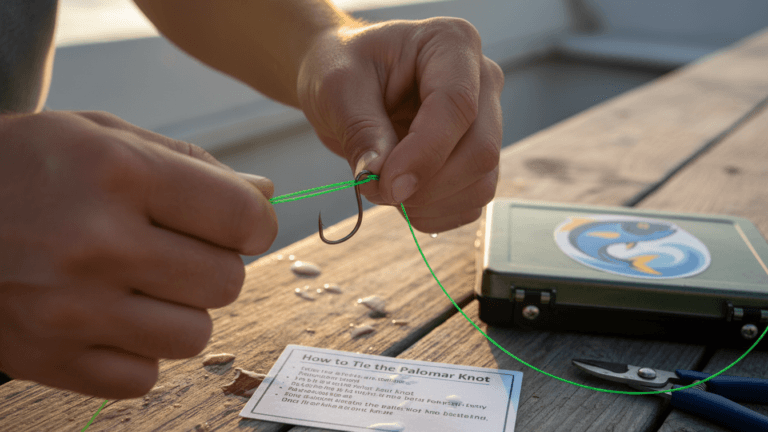
Braid will slip on certain knots if you rush. Whatever knot you trust, cinch it down slow and tight. I wet knots out of habit, even with braid to leader connections.
Rule 4: Set your drag lighter than you think.
Braid has almost no stretch. If your drag is locked and you hit a close-range hookset, something gives, sometimes it’s the hook hole in the fish.
A small downside that shows up in ponds: braid can cut into soft wood and wedge itself in cracks. It’s not common, but it happens around old dock posts and gnarly laydowns. If you keep breaking off in the same zone, that’s a hint to switch to fluoro for abrasion, or at least run a longer leader.
Check out Reaction Tackle Braided Fishing Line on Amazon
Fluoro or mono for pond bass: clean choices that still catch plenty
If braid is the strong rope, fluorocarbon and monofilament are more like specialized cords. They aren’t better in every way, but they can make certain pond bites feel easier.
Fluorocarbon rules (keep it practical)
Fluoro sinks, has low stretch, and is usually more abrasion resistant than mono. That makes it a great “contact” line.
Use fluorocarbon when:
- You’re fishing jigs, Texas rigs, shaky heads, or anything you want to feel on the bottom.
- The pond has rocks, riprap, mussels, or rough wood edges.
- The water is clear and you want a lower-visibility main line.
Simple starting points:
- Spinning reels: 6 to 10 lb fluoro for finesse, 8 to 12 lb if you’re around cover.
- Baitcasters: 12 to 17 lb for most pond plastics and jigs, heavier if you’re skipping docks with sharp edges.
Two honest warnings, because fluoro isn’t magic. First, it can be stiff and coil on spinning reels, especially in colder months. Second, bad knots break easier on fluoro than on mono. Retie more than you think you need to, especially after pulling free from weeds.
Check out my suggestion- Berkley Vanish Fluorocarbon Fishing Line on Amazon
Monofilament rules (the “easy day” line)
Mono floats, has more stretch, and is generally forgiving. It’s also cheaper, which matters when you’re learning or when you fish around messy banks that eat lures.
Use monofilament when:
- You’re throwing topwater and don’t want line drag pulling the bait down.
- You’re using treble hook lures and want a little cushion on surging fish.
- You want a setup that behaves well for newer anglers or kids (fewer knot issues, fewer surprises).
Simple starting points:
- 8 to 12 lb mono covers a lot of pond bass fishing.
- 10 to 15 lb is a nice range around light cover, small swimbaits, and general bank fishing.
One mild contradiction: I sometimes like mono even in clearer ponds, even though it’s more visible than fluoro. If the bite is aggressive, it doesn’t matter much, and the stretch saves fish that swipe at the bait near the bank.
Check out Berkley Vanish Fluorocarbon Fishing Line on Amazon
The “one-rod” setups that keep life simple
If you want a clean answer for fishing line pond bass without owning a line library, here are two that work:
- Spinning combo: 15 lb braid to 8 or 10 lb fluoro leader (great for worms, small jigs, weightless plastics).
- Baitcaster combo: 12 to 15 lb mono for moving baits, or 15 lb fluoro for bottom baits (pick one based on your favorite lures).
Conclusion: pick line like you’re planning for the worst five seconds
Most pond bass are lost in a short window, the first run into weeds, the head shake at the bank, the last-second surge when you finally see the fish. Choose line based on cover first, then clarity, then lure style. Braid wins in weeds, fluoro shines on bottom contact, mono keeps topwater and trebles honest. Keep it simple, retie more than you want to, and trust your hands, because confidence catches fish too.