

There’s something honest about a frozen waterbody. Its ice conditions look calm, almost friendly, and that’s the problem. Ice fishing safety starts with admitting a simple truth: ice can fool you. A lake that held a crowd last weekend can have a bad pocket today, just a few steps away.
I’ve had mornings where the ice looked solid, then suddenly turned hollow near a shoreline bend. Nothing dramatic happened, but it was a good reminder that winter fishing is less about bravery and more about habits. The safe anglers aren’t the ones with the fanciest sled, they’re the ones who keep checking, keep moving carefully, and don’t treat “it was fine last time” as a plan.
This guide covers the checks that matter, the gear that helps when things go wrong, and what to do if the ice breaks under you.
Start With The Ice: Thickness Rules that Actually Keep You Alive
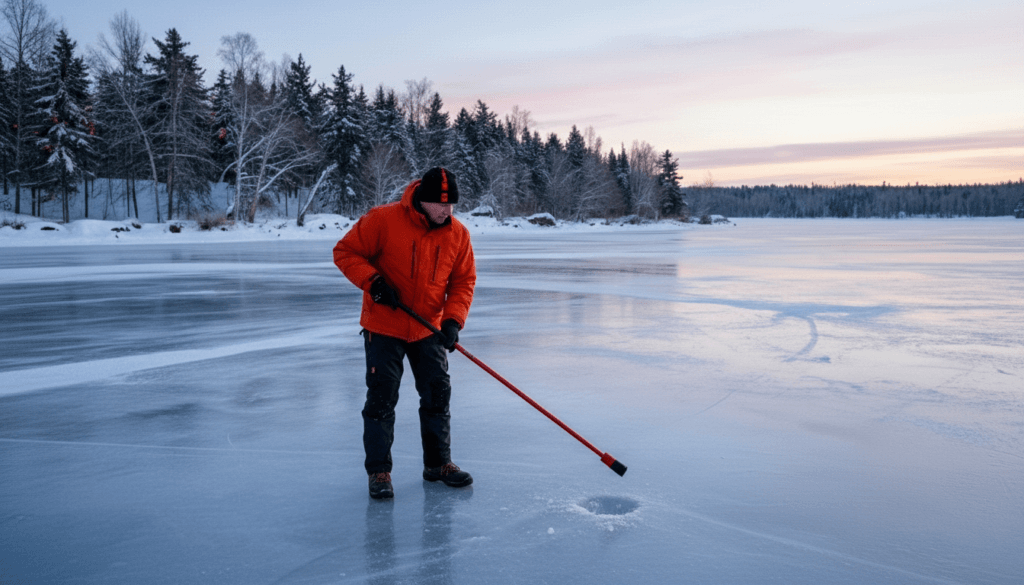
If you remember one thing, make it this: check the ice thickness yourself, in the spots you’re walking. Don’t rely on what you are told, checking for yourself is always better because Ice thickness can change fast, even across a small bay. Snow cover, springs, currents, and cracking ice can all create weak zones that don’t look weak.
A common baseline guideline, especially for new ice in early season, is that you want at a minimum at least 4 inches of clear ice, often called blue ice, for walking and ice fishing. Under 2 inches, don’t go, stay off the ice! Also, ice type matters more than most people think. White ice (frozen slush) is much weaker than clear ice, and a rule of thumb is you may need about double the thickness to achieve similar ice strength.
Here’s a practical quick-reference of ice thickness guidelines:
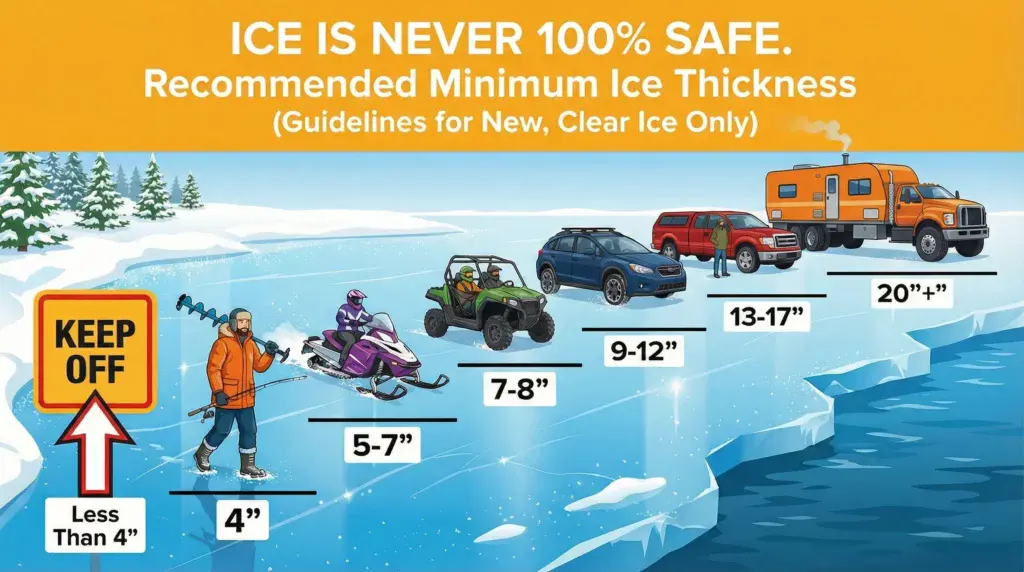
Guidelines for new, clear ice. Conditions can change fast across a single lake.
| Ice thickness (new, clear ice) | What it can typically support |
|---|---|
| Less than 4 inches | Avoid completely |
| 4 inches | Walking, skating, ice fishing |
| 5 to 6 inches | Snowmobile or ATV |
| 8 to 10 inches | Small car (conditions vary a lot) |
| 12 inches and up | Larger vehicles (still risky, local guidance matters) |
A few on-ice habits that help more than people admit, including always checking ice thickness:
- Use a spud bar or ice chisel as you walk. Tap every few steps early and late season. If it punches through in one hit, turn around.
- Drill test holes often with an auger, especially when moving from deep basin to shoreline, or crossing a point.
- Treat pressure ridges as warnings, not shortcuts. Pressure ridges can open, refreeze, and hide weak edges with lesser ice strength.
And watch the “soft spots”: areas near inlets and outlets, narrows, bridges and culverts, docks with bubblers, and any place with flowing water. Even vegetation (cattails, weed beds) can weaken ice because decaying plants give off heat under the surface.
Pack like you might need to self-rescue (because you might)
People love talking rods, sonar, and lures. I get it. Still, the gear that matters most on hard water is the safety gear that helps you stay above water, get out, and not freeze afterward.
If I’m walking onto a lake, I want these safety gear items close, not buried under a snack bag:
- Ice picks: Wear them around your neck, not in the sled. If you go in, ice picks give you bite on slick ice.
- Throw rope: A simple rescue rope can keep a second person from becoming the next emergency.
- Whistle: Cold air and wind swallow shouting.
- Ice cleats: Falls are common, and head injuries happen fast on hard ice.
- Flotation device: A life vest under a jacket works, and a flotation suit is even better if you fish a lot.
- Ice auger: It’s your “advance scout” for thickness.
Then there’s the comfort gear that turns into safety gear when the weather flips:
- Winter gear like warm layers, not one giant coat. A hooded, windproof, waterproof outer layer helps when the wind rises.
- Waterproof boots, warm socks, toque, scarf, and gloves. Cold feet change your decisions in dumb ways.
- A vacuum bottle with something hot. Not fancy, just effective.
- A ladle or scoop to keep your hole free of slush. It seems minor until your line freezes in place and you start rushing.
Nice-to-have items can also reduce risk because you make better choices when you’re not miserable. A small shelter blocks wind, and the darker interior can even help you see bites or fish movement under the ice. Something simple to sit on (even a bucket) keeps you off the cold surface and slows heat loss.
One more thing people forget: local rules. Ice fishing closures, bait bans, and special conservation rules (often for species like burbot in some regions) can change by waterbody and season. Checking regs isn’t just about tickets, it also keeps you from fishing unsafe or restricted areas. Learn more about the Burbot below.
If The Ice Breaks: What to do in the first 60 seconds
Nobody plans to fall through the ice. That’s why the first moments after you fall through the ice matter so much. Cold shock can steal your breath and your coordination. The goal is to buy time, then move with a simple plan.
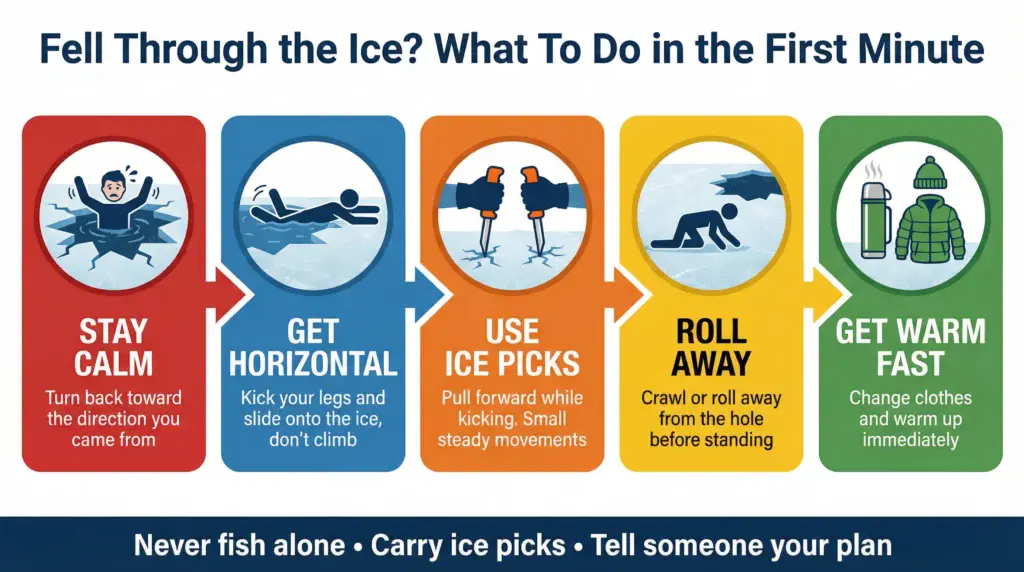
If You Fall Through The Ice
1) Stay calm, then turn back the way you came.
The ice that held you a second ago is more likely to hold you again. People panic and try a new direction, and that’s when they meet thinner ice.
2) Get horizontal in the water.
Think of sliding onto the ice, not climbing up like a ladder. Kick your legs to help your body rise.
3) Use ice picks if you have them.
Drive the points into the ice, then pull while you kick to reinforce your horizontal climb out of the water. Small movements. Repeat. It’s ugly and slow, and that’s fine.
4) Once you’re out, don’t stand up right away.
Roll away from the hole, or crawl. Put distance between you and the weak edge before you try to get to your feet.
5) Get dry and warm fast.
Hypothermia doesn’t always feel dramatic at first. If you can, head to shelter or a vehicle, change clothes, and get warm drinks in you.
For your fishing partner, the rule is blunt: don’t run to the hole. Stay back on solid ice, spread your weight, and use a throw rope, a long branch, a sled, or an auger to extend reach for the rescue. The safest rescue is the one where the helper never leaves solid ice in the first place.
Also, and I know this sounds like overkill until it isn’t: don’t go alone. Ice fishing with a buddy turns a worst day into a survivable one. At minimum, tell someone exactly where you’ll park and when you’ll check in.
Conclusion: Safe Ice Fishing is Mostly Habits, and Not Hero Moves
Ice fishing can be a quiet, social, and honestly pretty peaceful pastime, as long as you treat the frozen waterbody with respect. Check thickness often, avoid known weak areas, and bring the safety gear that helps you self-rescue and stay warm. Fish with a buddy, tell someone your plan, and don’t let comfort or confidence talk you into risky ice. Mastering ice fishing safety ensures the best trip is the one where the only story you bring home is about the bite, not rescue.