

Safety and Personal Essentials
Overnight freshwater camping trips in the Lower 48 expose anglers to variable weather, remote locations, and extended time away from help. Proper safety gear and personal essentials ensure you stay comfortable, healthy, and ready to handle emergencies while chasing bass, walleye, trout, or catfish from riverbanks and lake shores.
This guide covers must-have safety items, weather protection, health basics, and organization tips specifically for freshwater anglers camping near water in the continental U.S.
Why Safety Gear Matters for Freshwater Campers
Freshwater camping differs from standard campground stays—anglers often set up on uneven riverbanks, gravel bars, or muddy lake edges where slips, sprains, and sudden weather changes pose real risks. Remote access points on reservoirs and smaller lakes can be hours from hospitals, making self-sufficiency critical.
Key freshwater camping safety priorities:
- Weather preparedness: Rapid temperature drops, thunderstorms, and high winds near large bodies of water.
- Injury prevention: Slippery rocks, cut fingers from hooks/knives, insect bites, and sunburn.
- Emergency communication: Spotty cell service at many Lower 48 fishing spots.
- Health & hygiene: Waterborne pathogens, food safety, waste management.
Essential First Aid Kit for Anglers
A fishing-specific first-aid kit addresses the most common injuries: hook punctures, knife cuts, slips on wet rocks, and sunburn.
Core First Aid Items
- Antiseptic wipes & antibiotic ointment (Neosporin) for hook punctures and cuts
- Hook removal tool or hemostats (essential for embedded barbs)
- Bandages (various sizes, including knuckle/fingertip for tackle work)
- Medical tape & gauze for larger wounds or splinting
- Pain relievers (ibuprofen, acetaminophen) for headaches, sprains
- Benadryl (diphenhydramine) for allergic reactions, bug bites
- Tweezers for splinters, ticks
- Burn gel for stove accidents
- Medical shears for cutting clothing/bandages
Pro tip: Add fishing line for emergency sutures and super glue for small cuts (medical-grade only).
Learn More: Essential First Aid Kit for Anglers
Weather Protection Layers System
Lower 48 freshwater spots swing from hot afternoons to chilly, damp nights. Layering beats single heavy garments.
Layering System
BASE LAYER: Moisture-wicking synthetics (merino wool best)
MID LAYER: Fleece or lightweight puffy for insulation
SHELL LAYER: Waterproof/breathable rain jacket & pants
Recommended Weather Gear
- Rain jacket: Gore-Tex or eVent (packable, hood adjusts for wading)
- Rain pants: Full side zips for easy on/off over waders
- Fleece midlayer: 100-weight for most conditions
- Puffy jacket: 800+ fill down or synthetic for cold nights
- Warm hat & gloves: Wool beanie, waterproof gloves
- Quick-dry camp towel: For post-rain drying
Regional note: Southern anglers need bug shirts; Northern anglers prioritize extra warmth.
Learn More: Weather Protection for Freshwater Camping
Navigation & Communication Essentials
Many prime Lower 48 fishing spots have poor cell coverage and confusing access roads.
Communication & Location
- Personal locator beacon (PLB) or Garmin inReach (no cell service needed)
- Fully charged smartphone + external battery pack (20,000mAh minimum)
- Paper maps + compass (USGS topo maps for backcountry lakes)
- GPS app (Gaia GPS, onX Fish) with offline maps downloaded
- Whistle + signal mirror for emergencies
- Headlamp + extra batteries (already covered in main pillar)
Critical: File a float plan—location, return time, contacts—with someone not on the trip.
Read More: Emergency Communication for Remote Fishing
Personal Health & Hygiene Kit
Multi-day freshwater trips away from facilities demand portable hygiene solutions.
Health & Hygiene Basics
- Water filter/purifier: Sawyer Squeeze or LifeStraw (river/lake water safe)
- Water purification tablets (backup to filter)
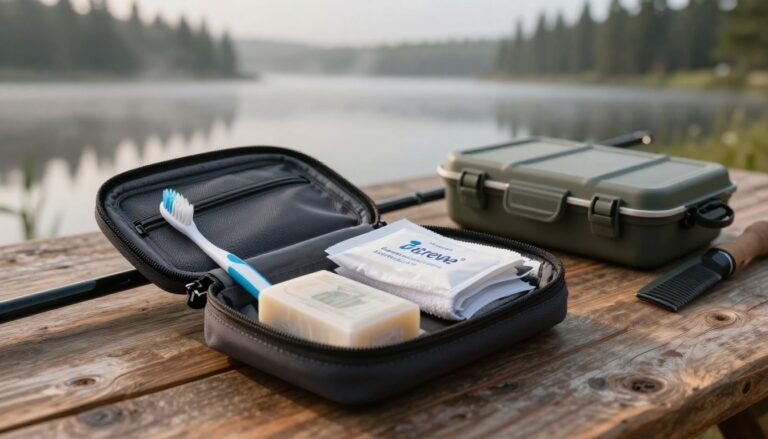
- Biodegradable soap + camp suds
- Quick-dry microfiber towel
- Toilet paper + hand sanitizer + trowel
- Wet wipes (biodegradable preferred)
- Prescription medications + extras
- Sunscreen (SPF 50+, water-resistant) + lip balm
- Insect repellent (DEET 30% or picaridin)
Waste rule: Pack out ALL waste (including used TP) from primitive sites.
Learn More: Hygiene Kit for Multi-Day Fishing Trips
Fire Starting & Emergency Shelter
Even with “no-burn” restrictions, multiple redundant fire-starting methods save lives.
Fire Starting Kit (4 Methods)
1. Waterproof matches + striker
2. Lighter (Bic) + ferro rod
3. Waterproof tinder (cotton balls + petroleum jelly)
4. Fire starter cubes
Emergency Shelter
- Emergency bivvy or space blanket (weighs 4 oz)
- Trash compactor bags (2 heavy-duty = emergency shelter/ground cloth)
- Cordage (paracord 550, 50ft min)
Pro tip: Practice one-handed fire starting—wet hands from fish handling make it harder.
Learn More: Fire Starting for Wet Conditions
Fishing-Specific Safety Tools
Gear unique to angling injuries and situations.
Angler-Specific Safety
| Item | Purpose | Weight |
|---|---|---|
| Hook removal tool | Safe barb extraction | 2 oz |
| Pliers w/ cutter | Line cutting, hook removal | 6 oz |
| Wading staff | River crossing stability | 12 oz |
| Landing net | Safe fish handling | 8 oz |
| Fillet knife sheath | Prevents cuts | 1 oz |
| Fingerless gloves | Hook protection | 4 oz |
River safety: Never wade above your waist solo. Test every step.
Food Safety & Bear Awareness
Freshwater camping coolers hold bait, fish, and perishables—food safety prevents illness.
Food Storage Rules
- Separate coolers: Bait/fish vs. human food
- Raw fish container: Leak-proof double bags
- Cooking area: 100+ yards from sleeping area
- Bear bags (or canister in grizzly country): Suspend food 12ft high
Quick Food Safety Checklist
- Cook fish to 145°F internal
- Cool leftovers immediately in cooler
- Sanitize surfaces after raw fish contact
- Drink only treated water
Learn more: Food Safety for Fishing Camps
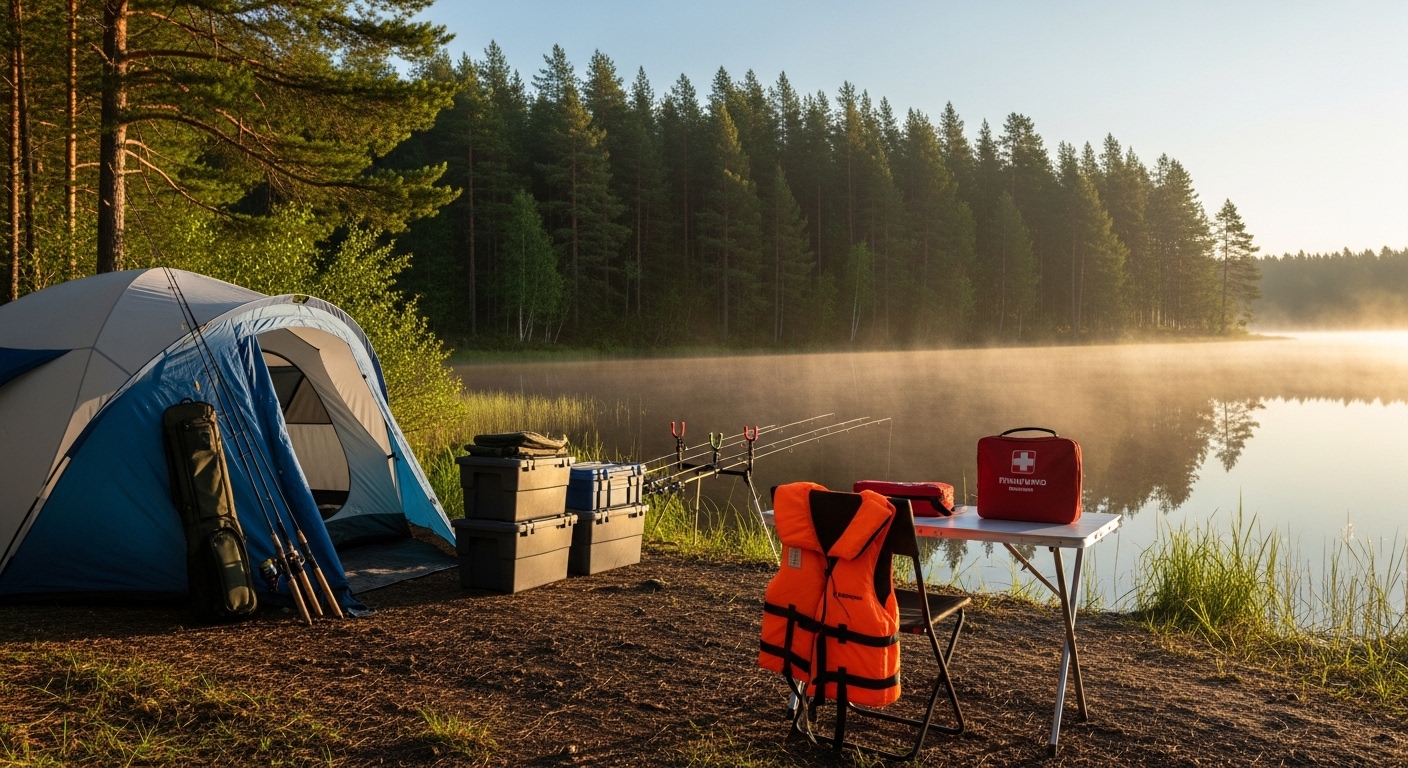
Organization: Safety Gear Ready Access
Safety gear does no good buried in your pack. Use color-coded organization.
Safety Gear Packing
RED DUFFEL: First aid, PLB, fire starters, emergency shelter
BLUE BIN: Water purification, hygiene, medications
GREEN BAG: Navigation, communication, extra batteries
Daily check: Before fishing, confirm PLB has fresh batteries and you’ve filed your float plan.
Quick-Reference Safety Checklist
Before leaving home:
- File float plan (location + return time)
- Download offline maps
- Charge all devices + pack batteries
- Check the weather forecast
- Test PLB/Garmin
At camp setup:
- Mark the exact GPS coordinates
- Clear 10ft safety radius around the tent
- Test all lights
- Locate nearest hospital (download directions)
Every morning:
- Check weather updates
- Reapply sunscreen/bug dope
- Confirm the return time with the contact
Key Takeaway
Freshwater fishing camps can turn risky fast without the right gear. A solid safety system—first aid, weather layers, communication tools, hygiene, and food handling—keeps anglers protected, self-sufficient, and ready for emergencies in remote Lower 48 waters.