

Fishing feels calm until it doesn’t. One second you’re threading bait, the next you’ve got a hook in your thumb, a knife nick on a wet deck, or a fin spine stuck where it shouldn’t be. Add sun glare, bugs, and heat, and you’ve got a real-world mess.
A first aid kit for anglers doesn’t need to be huge. It needs to be waterproof, fast to open, and built for the injuries anglers actually get. This is a short, practical checklist that works for bank fishing, kayaks, and boats.
Start with the injuries anglers get most often
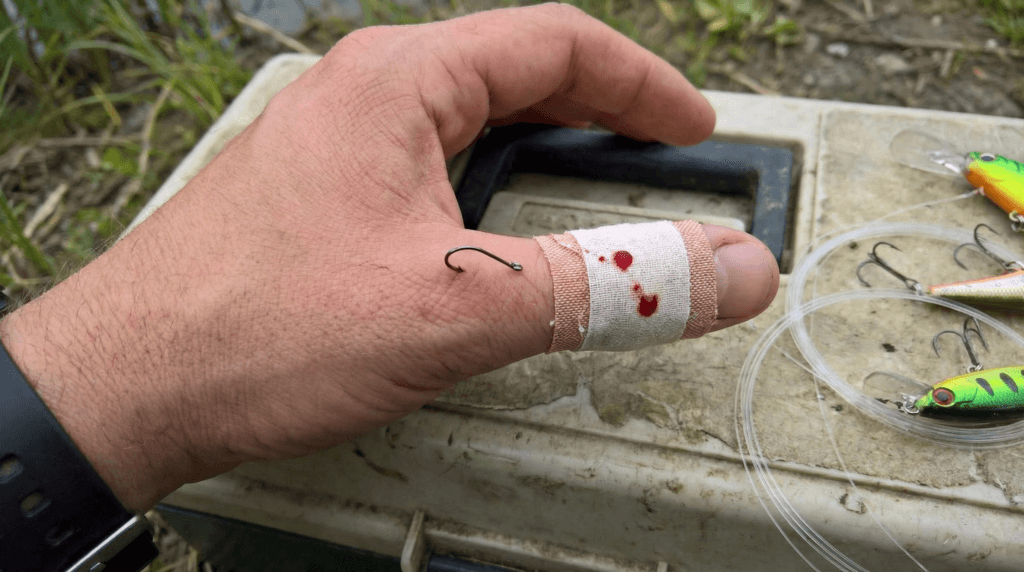
Most kits fail because they’re built for “anything” instead of fishing. Think hook punctures, quick knife cuts, fish spines and gill plates, sunburn, insect bites, and dehydration. Slips happen too, wet ramps and rocking boats don’t care how steady you feel.
A short shore trip can get by with basics. Remote water is different. When you’re an hour from the truck (or cell service is weak), small wounds matter more. Lake water, bait, fish slime, and bacteria can turn “it’s fine” into a swollen, angry hand by tomorrow.
Hook punctures, knife cuts, and fish spines
These wounds get filthy fast. Bait juice, fish slime, and river water get pushed right into punctures. Clean early, cover well, and watch for heat, spreading redness, pus, or fever. Deep punctures, embedded hooks near joints, or numb fingers are a “stop fishing” moment. Get medical help.
Sun, bugs, heat, and allergic reactions
Sunburn sneaks in, even on cloudy days. Bugs and stings are worse near marshy banks at dusk, you know the drill. Surprise allergies happen too. Trouble breathing, swelling of the face or throat, or widespread hives means emergency help now.
The essential first aid kit checklist for anglers
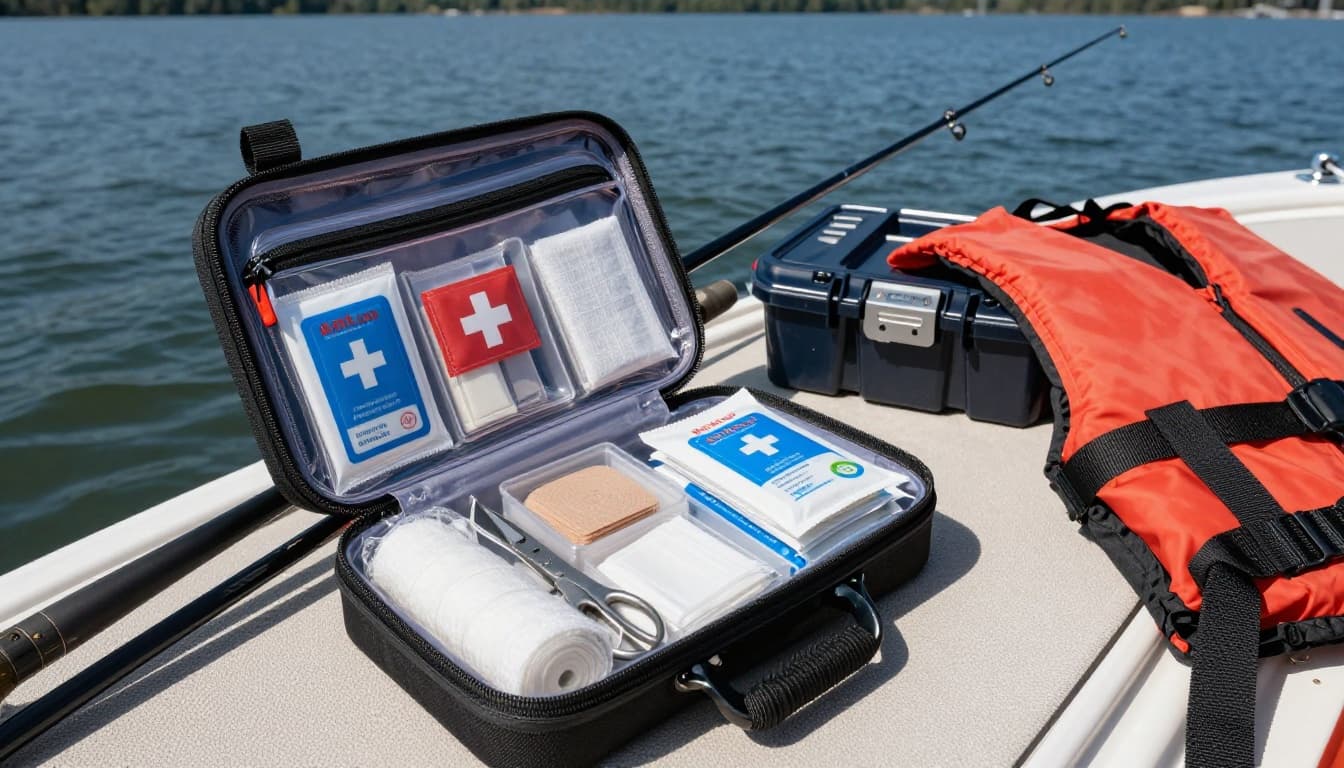
Keep it small, but don’t skimp on the boring stuff. Single-use packets and travel sizes save space and stay cleaner.
Wound cleaning and infection prevention
- Antiseptic wipes or alcohol prep pads: Quick cleaning when water’s questionable.
- Saline pods or clean water: Rinse grit and slime out of cuts.
- Antibiotic ointment packets: Small, clean, and easy to replace.
- Non-adherent pads + gauze (2×2 and 3×3): Pads don’t stick, gauze builds layers.
- Medical tape + assorted bandages: Tape stays on better with damp skin.
- Butterfly closures: For clean, straight cuts that need edges pulled together.
- Nitrile gloves: Keeps wounds cleaner, and your hands less gross.
Bleeding control, sprains, and bigger problems
- Hemostatic gauze (QuikClot-style): For bleeding that won’t quit.
- Pressure bandage or elastic wrap: Works for bleeding and sprains.
- Triangular bandage: Sling, wrap, pressure, it does a lot.
- Compact splint (wire splint style): Stabilize a finger, wrist, or ankle.
- Small trauma shears: Cut line, tape, or clothing safely.
- Space blanket: For shock, chills, or a long wait.
- CPR face shield + basic first aid card: Simple, light, and worth it.
Pack it right so it stays dry, clean, and easy to use
A good kit that’s soaked is just luggage. Use a waterproof pouch, or a hard case on a boat. Double-bag liquids, label pockets (bleeding, burns, meds), and pack it so you can grab it one-handed. I like “top layer items” that get used fast: wipes, gauze, tape, gloves.
Check expiration dates and restock after each trip. Do it while the coffee’s brewing, not at the launch.
Where to keep it on the bank, in a kayak, or on a boat
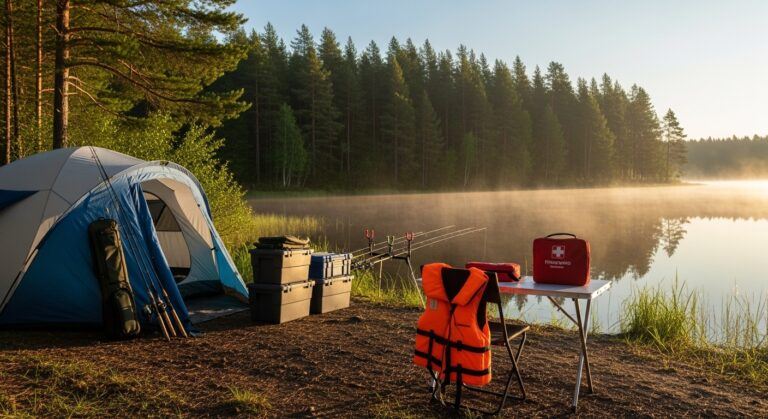
Bank: top pocket of your backpack. Kayak: main kit in the hatch, plus a mini kit on your PFD. Boat: console or under the helm, not buried in a locker. Keep meds out of extreme heat when you can.
Conclusion
A smart angler’s first aid kit is built for real problems, punctures, cuts, spines, sun, and heat. Keep it waterproof, keep it reachable, and know when to quit fishing and get help. Before every trip, take 2 minutes and check bandages, wipes, meds, and shears. Then consider basic first aid training. It’s not dramatic, it’s just prepared.