

Some days, bass want a bait that hovers and flutters. Other days, they want something that drags along the bottom like it lives there. That’s where the Carolina rig bass approach shines, it’s a simple system that keeps your bait off the bottom while your weight stays in contact with it.
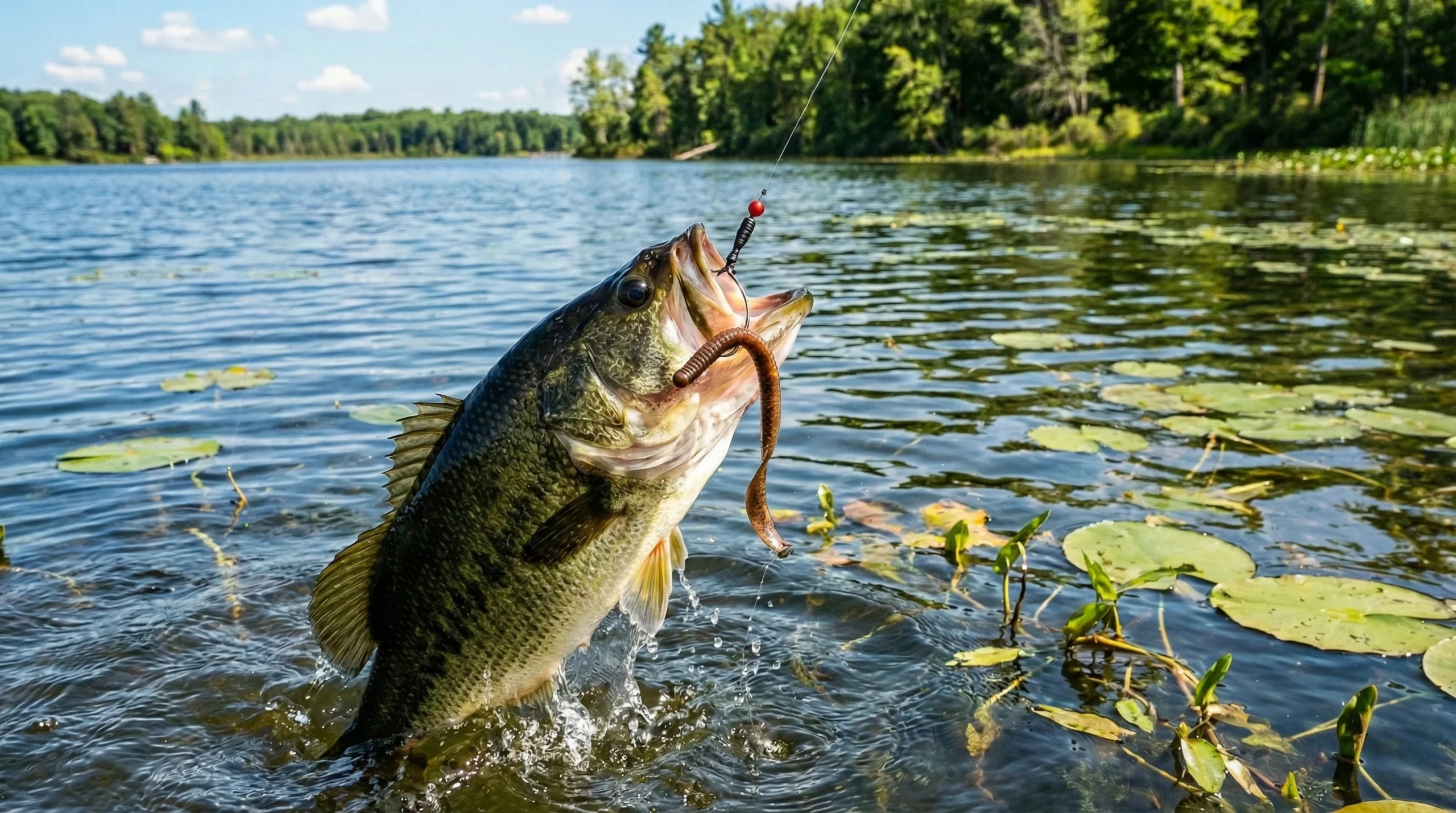
If you’ve ever felt like you’re fishing “over” the fish instead of “to” them, a Carolina rig can fix that. It’s built for covering water, reading bottom, and getting bites when bass won’t chase.
What the Carolina rig really does (and why bass react to it)
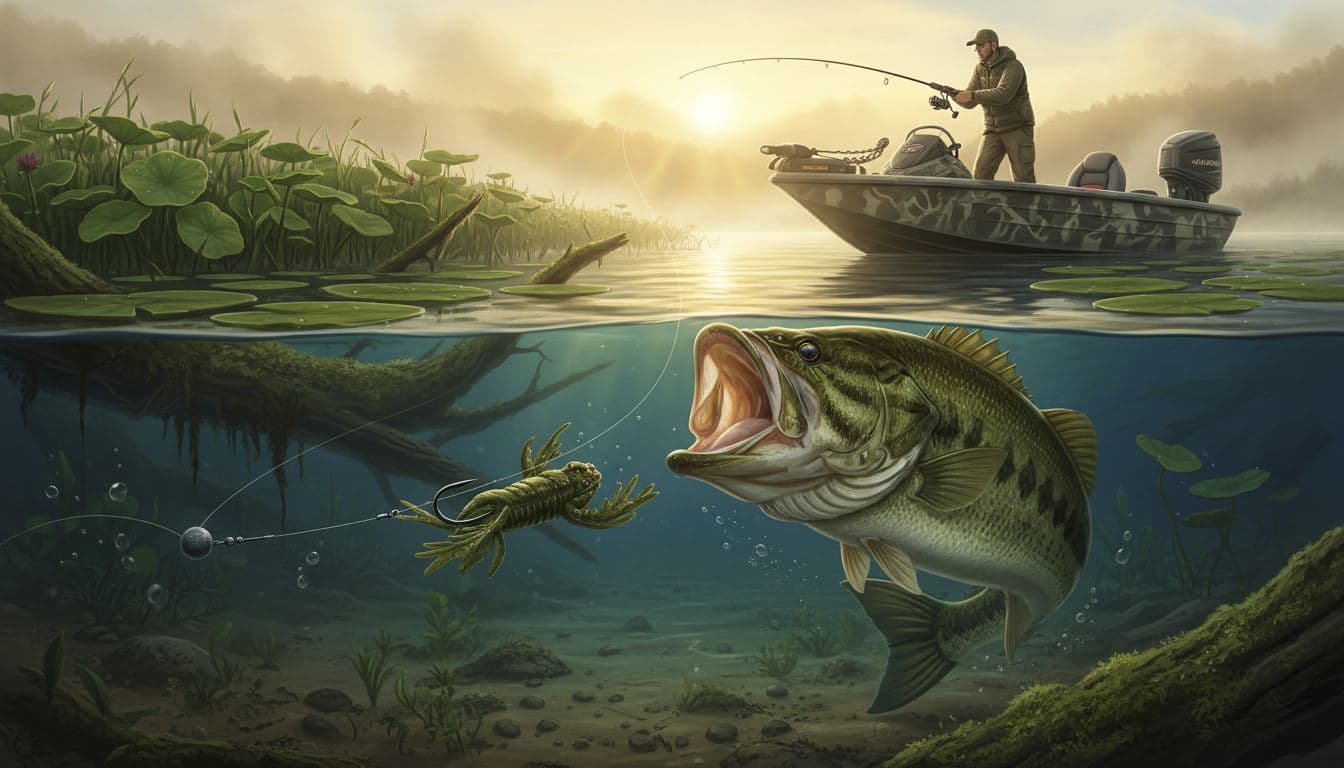
A Carolina rig is a sliding sinker on your main line, a swivel, then a leader to the hook and bait. The weight stays on the bottom, the bait trails behind it. That separation is the whole point.
It fishes a little like walking a dog, but on the lake floor. The sinker taps and stirs, the bait follows with a softer, slower look. When bass are nosed down, this rig kind of puts dinner right in their lane.
It’s also a sneaky “scouting” tool. By feel alone, you can tell if you’re on rock, shell, clay, sand, or muck. That matters because bass don’t set up the same way on every bottom.
Carolina rig setup (the core parts you can’t skip)
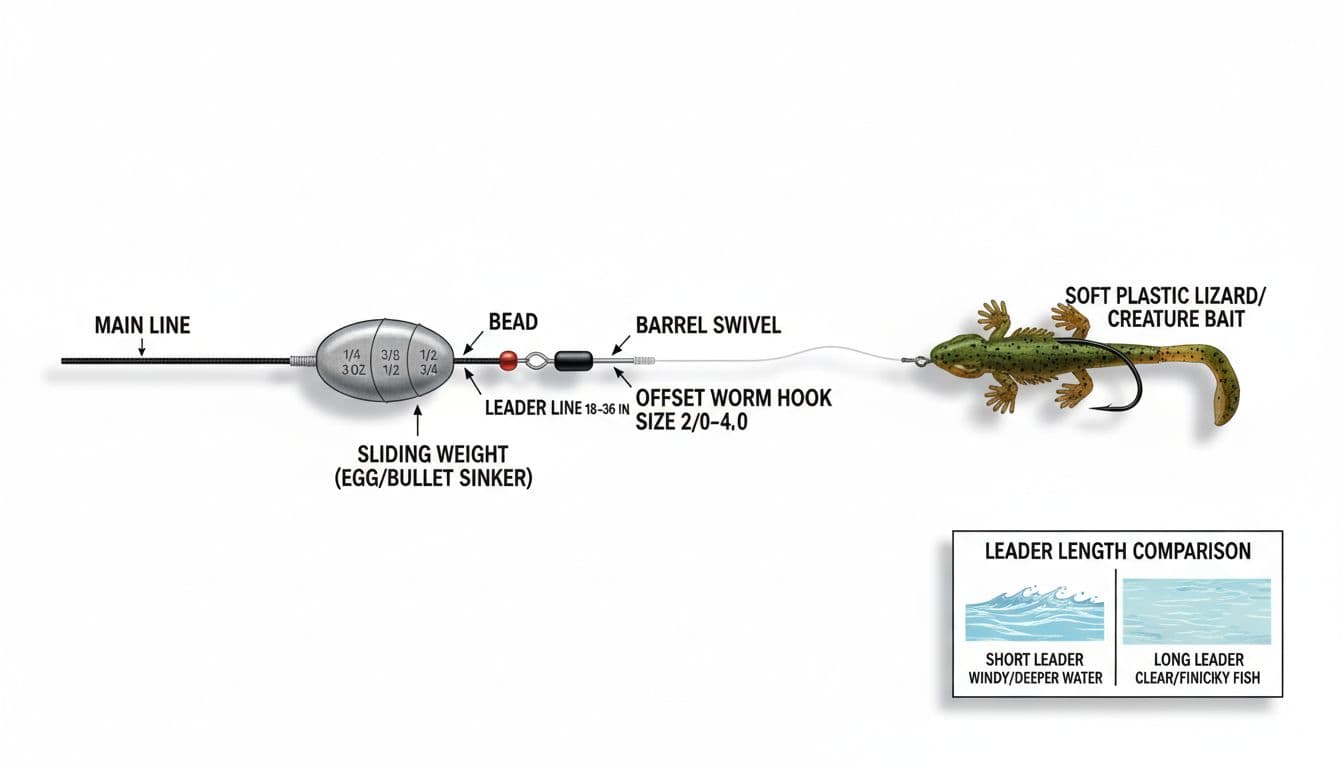
Here’s the setup most anglers start with, and honestly it still holds up:
- Sliding bullet or egg sinker on the main line
- Optional bead (plastic or glass)
- Barrel swivel
- Leader (usually fluorocarbon)
- Offset worm hook
- Soft plastic (lizard, creature bait, worm)
The weight slides until it hits the bead and swivel. That “click” can help, but it also protects the knot at the swivel. I used to skip the bead sometimes, then I started noticing frayed knots after long drags on rock. Now I usually run one.
Main line and leader: keep it practical
For main line, you’ve got two common routes:
Braid to leader: Great feel, easy long casts, solid hooksets at distance. It can be a little loud on some guides and a bit harsh around rock, but it’s hard to beat for bite detection.
Fluorocarbon main line: More stretch, less visible, and it handles abrasion well. The trade-off is feel, especially in deeper water.
Leader material is usually fluorocarbon. It sinks, it’s tougher than mono in most situations, and it keeps your bait tracking naturally behind the weight.
Hook and bait pairing that works without overthinking it
A 2/0 to 4/0 offset worm hook covers a lot of ground. Match the hook to the plastic, not your ego. If the bait bunches or balls up, the hook is too big.
Baits that tend to shine on a Carolina rig:
Creature baits: A good “search” profile, especially around brush, shell, or scattered grass.
Lizards: Still good, still annoying to bass (in a good way).
Straight-tail worms: More subtle, better when bass are pressured.
Carolina rig weights: how to choose without guessing
Weight selection is where people get stubborn. They pick a sinker, tie it on, and just suffer through wind or depth. I’ve done it too.
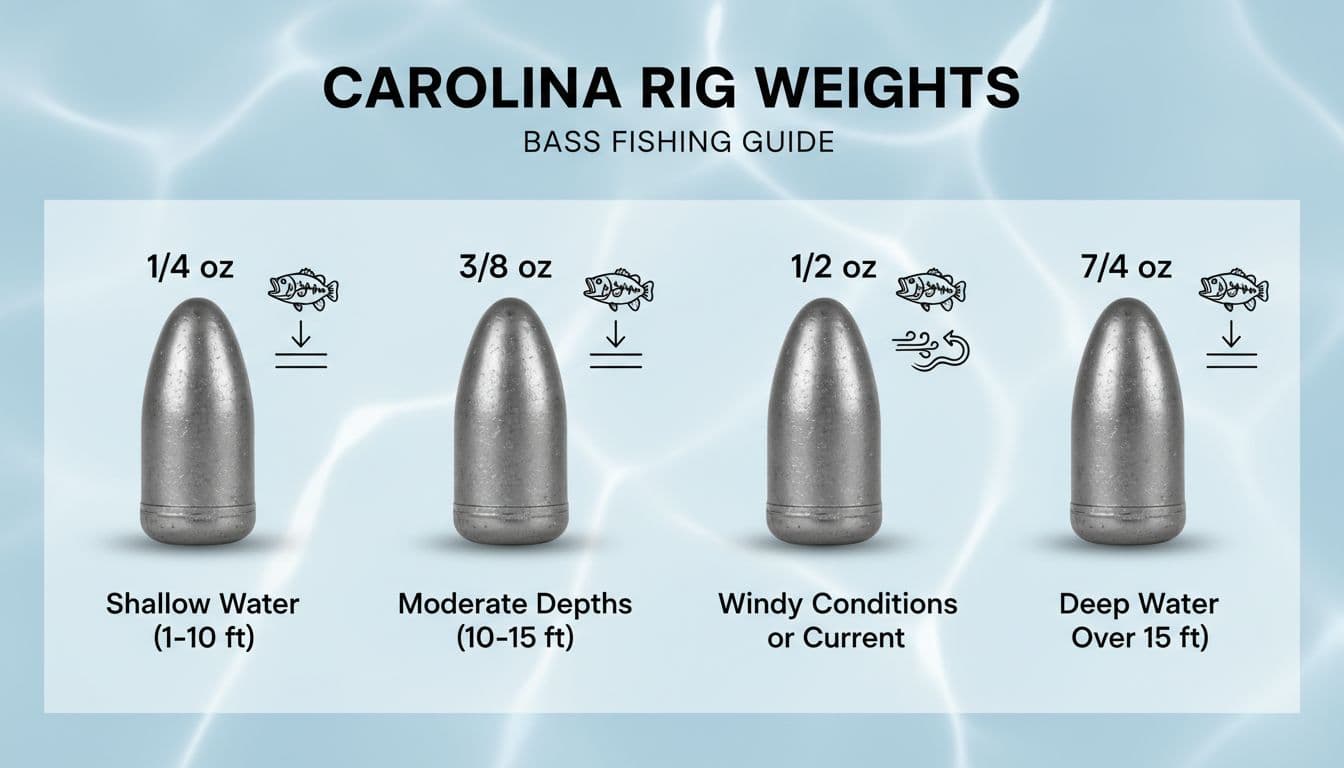
A good rule is simple: use the lightest weight that still keeps solid bottom contact. If you can’t feel the sinker, you can’t “read” the spot, and the rig loses half its value.
Here’s a quick cheat sheet:
| Sinker weight | Best starting use | What it feels like |
|---|---|---|
| 1/4 oz | Shallow flats, calm days | Light tap, easy glide |
| 3/8 oz | General use, 6 to 15 feet | Clear contact, still subtle |
| 1/2 oz | Wind, deeper edges, light current | Strong bottom feedback |
| 3/4 oz | Deep structure, heavy wind, long casts | “Thump” contact, fast sink |
Bullet sinkers slide through grass and cover a bit cleaner. Egg sinkers can roll more and hang less on some rock. Neither is magic, but if you’re snagging a lot, it’s worth swapping shapes.
Tungsten is smaller than lead for the same weight and it transmits bottom feel better. It also costs more, and sometimes that’s the whole decision right there.
Leader length and bead choices (small changes, big effect)
Leader length changes how your bait acts. Short leaders keep the bait closer to the disturbance of the weight. Long leaders let the bait float and wander more.
A simple range that covers most freshwater situations is 18 to 36 inches.
- Shorter leader (18 to 24 inches): Better in wind, deeper water, and when you want more control.
- Longer leader (30 to 36 inches): Better in clear water, or when bass keep short-striking.
Beads are optional, but useful. A glass bead is louder than plastic. If I’m on rock or shell and want a little extra sound, I’ll pick glass. In muddy water, sound helps. In ultra-clear water, I sometimes skip the click and keep it quiet.
When to use a Carolina rig for freshwater bass
The Carolina rig isn’t an all-day answer, but it’s a strong “plan B” that often turns into plan A.
It’s at its best when bass are relating to the bottom and you need to cover water without moving too fast. Think:
Points and humps: Drag it across the top, then down the side. Bites often happen on the first drop.
Ledges and channel swings: Great for keeping your bait in the strike zone longer.
Hard-bottom transitions: Sand to rock, mud to shell, gravel patches, bass love these edges.
Post-front conditions: When fish get tight and moody, the slower trailing bait looks easier to eat.
Summer and early fall: Deep fish, offshore structure, and schooling areas that sit near the bottom.
In heavy grass mats, it’s not my favorite. The sinker collects salad. But around sparse grass, outside weedlines, and holes in vegetation, it works better than people expect.
How to fish it: the retrieve that gets bites
The biggest mistake is working it like a jig. It’s more of a drag-and-pause deal.
Try this rhythm:
- Drag the sinker with the rod, slow and steady.
- Pause and let the bait settle behind it.
- Reel slack just enough to stay in touch.
- Repeat, and mix in a small hop now and then.
Keep your rod tip low and to the side. That angle helps you feel bottom contact and it keeps the rig moving forward instead of lifting up.
Bites can feel weird. Sometimes it’s a sharp tap, but a lot of times it’s just weight, like you snagged a wet leaf that swims off. If something feels “wrong,” sweep into it and keep reeling.
Common Carolina rig bass mistakes (and quick fixes)
A few issues show up over and over:
- Too light to feel: If you lose bottom contact, go heavier.
- Leader too long in wind: Shorten it, you’ll stay connected.
- Dragging too fast: Slow down until it feels almost boring.
- Wrong hook size: If your bait slides down the shank, size down.
- Not checking the leader: Re-tie when it gets nicked, rock and shell eat line.
Reeling it in
A Carolina rig doesn’t look flashy, and that’s part of the appeal. It’s steady, reliable, and it tells you what’s happening down there when the water won’t. Dial in your weight, keep a leader length that matches the conditions, and fish it slow enough to stay in touch.
If you’re trying to get better at offshore bites, Carolina rig bass fishing is one of the best teachers. Tie one on the next time your usual stuff feels ignored, and pay attention to the bottom, it’ll point you toward fish.