
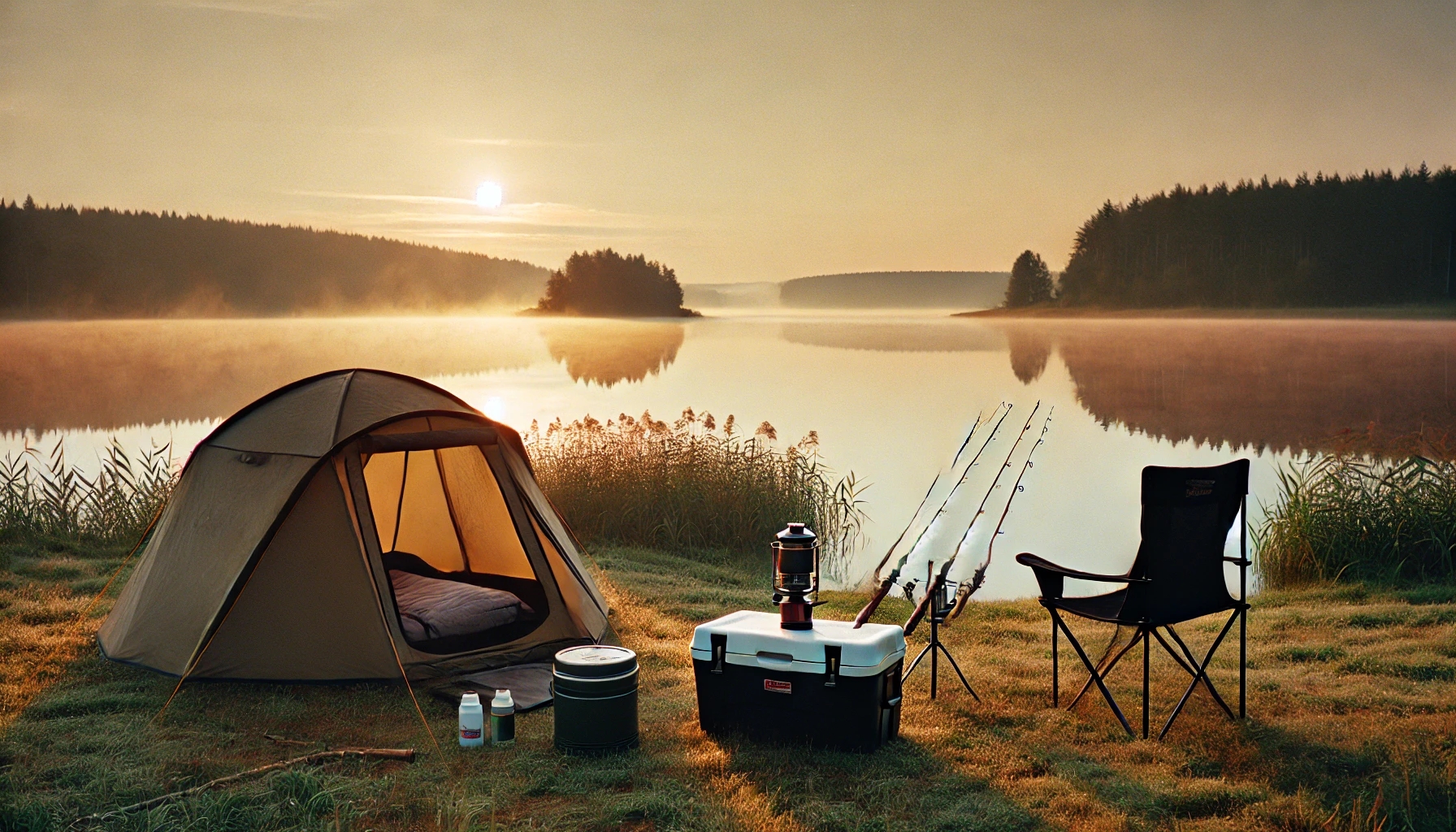
Best Camping Essentials for Anglers
Freshwater anglers in the Lower 48 need camping gear that can handle cool, damp nights, variable weather, and long hours on the bank chasing bass, trout, walleye, catfish, and panfish. The sections below are tailored to vehicle-based and short-hike freshwater trips across the continental U.S., with a link-ready title after each section.
Why Camping Gear Matters for Freshwater Anglers
Overnight freshwater trips often mean big temperature swings near lakes and rivers, with cool, damp air after sunset and early-morning fog. Good camping gear keeps you warm, dry, and organized so you can fish key low-light windows for species like bass, trout, panfish, and catfish.
Unlike casual campground camping, freshwater anglers in the Lower 48 often set up closer to the bank, on gravel, grass, or muddy flats, and move camp more often to follow conditions. Prioritizing weather resistance, fast setup, and compact footprints makes it easier to slide between camp chores and prime bite times at dusk and dawn.
Linking title: Camping Gear for Lower 48 Freshwater Anglers
Tents: Shelter for Bank-Side and Lakeside Camps
Freshwater trips in the Lower 48 often bring passing thunderstorms, condensation-heavy nights, and soggy ground near lakes, reservoirs, and rivers, so a quality waterproof tent is critical. A 2–3 person model gives you enough room for you and bulky tackle, waders, and cooler access without feeling cramped.
For most car-based freshwater anglers, freestanding dome or hub-style tents with at least a 2000 mm waterproof rating, full-coverage rainfly, and bathtub floor stand up best to dew and wind-driven rain. If you hike into backcountry trout lakes or smallmouth rivers, look for lighter backpacking tents that still pitch fast in fading evening light.
Linking title: Best Tents for Freshwater Anglers
Sleeping Bags and Pads for Cool, Damp Nights
Because water moderates air temperature, many freshwater spots in the Lower 48 feel cooler at night than nearby towns, especially in the shoulder seasons. A sleeping bag rated 10–15 degrees lower than the forecast low helps you stay warm through late-fall walleye, catfish, or trout missions.
Synthetic-fill bags are a wise choice for anglers because they retain insulation even if condensation or spray dampens your tent interior. Pair your bag with an insulated foam or inflatable pad to block ground chill and add comfort after long days wading or hiking to riverbanks and reservoir points.
Linking title: Sleeping Systems for Overnight Fishing Trips
Coolers and Food Storage for Bait, Catch, and Meals
Coolers pull triple duty on freshwater trips: they keep food safe, drinks cold, and bait or fillets at the right temperature. High-quality hard coolers with thick insulation are ideal for multi-day trips on remote reservoirs or big rivers where ice runs are inconvenient.
For quick one- or two-night missions, soft or backpack coolers work well for shore-roaming or small-boat fishing on lakes and rivers. Using separate coolers for bait/catch and food improves hygiene, and pre-chilling your cooler and using large frozen blocks extends ice life on warm-weather bass, crappie, or catfish trips.
Linking title: Best Coolers for Freshwater Fishing Camps
Portable Stoves and Cookware for Lakes and Rivers
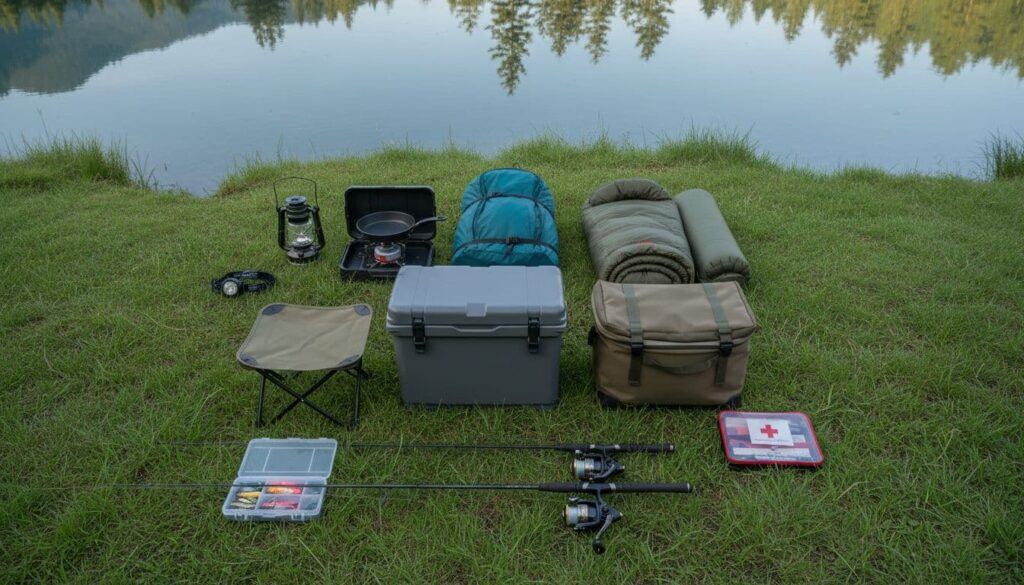
Open fires are not always allowed at popular lakes or river access sites in the Lower 48, so a compact gas stove is the most reliable way to cook meals or morning coffee. Dual-burner propane stoves suit truck and boat-angler camps, while small canister stoves are ideal when you’re packing into backcountry trout water.
A simple kit includes a stove, a lightweight pot and pan, utensils, and biodegradable soap, covering everything from heating freeze‑dried meals to frying panfish or trout fillets. Adding a small water filtration system lets you safely use lake or river water for cooking and cleanup on longer trips away from developed campgrounds.
Linking title: Camp Cooking Gear for Freshwater Anglers
Camp Chairs and Tables for Shoreline Comfort
Most freshwater bank anglers spend hours watching rod tips or working shoreline structure, so supportive seating matters as much as a good rod and reel. Sturdy camp chairs with armrests, cup holders, and stable feet handle sandy, grassy, or gravel banks around lakes and slow rivers.
A compact folding table makes a big difference when you’re organizing tackle, rigging for night fishing, or cooking at camp. Keeping a dedicated “rigging station” off the ground reduces lost gear, keeps lines clean, and speeds up re-rigging when the bite turns on at dusk or after dark.
Linking title: Best Camp Chairs and Tables for Bank Fishing
Lighting for Night Bites and Early Starts
Night fishing for bass, catfish, and trout is common across the Lower 48 because many species feed more actively in the dark, especially in warm weather. A quality headlamp with adjustable brightness and red mode keeps your hands free while tying knots, rebaiting hooks, or unhooking fish after sunset.
Lanterns help light cooking areas and tent interiors without blinding you on the way back to the water. Small clip-on lights or glow sticks on rod tips help you see subtle bites at night, and pairing lights with a rechargeable power bank or solar panel keeps everything running on multi-night trips.
Linking title: Lighting Gear for Night Fishing Camps
Organization and Storage for Multi-Day Trips
Freshwater anglers juggle rods, tackle trays, waders, nets, and camp gear, so organization is crucial—especially when moving between truck, boat, and shoreline. Waterproof duffels or dry bags protect clothes and electronics from spray, rain, and early-morning dew near lakes and rivers.
Stackable bins for camp kitchen gear and tackle let you build modular “grab-and-go” kits for different trips, from weekend bass camping to long trout road trips. Rod tubes, compact spinning or fly rod breakdown designs, and hard cases keep your rods safe when hiking into remote creeks or bouncing down washboard access roads.
Linking title: Organizing Camping and Fishing Gear
Personal Essentials and Safety for the Lower 48
Weather in the Lower 48 can swing from hot afternoons to chilly, wet nights, especially near freshwater in spring and fall. Packing breathable rain gear, insulating layers, and a warm hat and gloves keeps you comfortable across regions from the Upper Midwest to the Appalachians and Rockies.
A stocked first-aid kit, multi-tool, sunscreen, insect repellent, and plenty of drinking water or filtration are non-negotiable on riverbanks, reservoirs, and remote lakes. Letting someone know your location and return time is especially important when camping near less-developed access points or hiking into backcountry trout or smallmouth waters.
Linking title: Safety and Personal Essentials for Freshwater Camps
Affiliate Disclosure
Some links on Angler Supply Guide are affiliate links. If you click a link and make a purchase, we may earn a commission at no extra cost to you.
As an Amazon Associate I earn from qualifying purchases.
We only recommend products we believe are useful for anglers. Product prices and availability are subject to change. Any price and availability information displayed on Amazon at the time of purchase will apply to the purchase of that product.
Comfort Upgrades for Longer Freshwater Adventures
Once core needs are covered, small upgrades make multi-day freshwater trips far more enjoyable. Compact hammocks are perfect for midday breaks between morning and evening bites on lakes and big rivers.
Portable fans or safe tent heaters (where appropriate and used according to manufacturer guidance) help manage temperature in humid Southern summers or chilly Northern shoulder seasons. Simple extras like a small Bluetooth speaker used at low volume away from other anglers, or a privacy shelter for changing and camp showers, add comfort without sacrificing the water’s quiet, wild feel.
Linking title: Comfort Add-Ons for Multi-Day Freshwater Trips**
Best Camping Essentials for Anglers – Frequently Asked Questions
Essential gear includes waterproof tents, synthetic sleeping bags with pads, high-performance coolers, portable propane stoves, sturdy camp chairs, LED lighting, and organized storage solutions designed for bank-side freshwater fishing trips in the Lower 48.
Look for 2-3 person freestanding dome or hub tents with 2000mm+ waterproof rating, bathtub floors, and vestibules. Quick-pitch designs save time for evening setups near lakes and rivers.
Choose synthetic-fill bags rated 10-15°F below expected lows. Pair with insulated pads to combat ground chill. Mummy shapes save weight while rectangular bags offer more room.
Hard coolers like YETI Tundra or Engel models excel for multi-day ice retention. Use separate coolers for bait/catch vs. food. Pre-chill and use frozen blocks for maximum efficiency.
Wind-resistant propane stoves (single or dual burner) perform reliably. Canister stoves suit backpacking. Always include lightweight cookware, utensils, and biodegradable soap.
Choose chairs with adjustable feet, rust-resistant frames, armrests, and rod holder pockets. Pair with lightweight folding tables for tackle organization and meal prep.
Use waterproof duffels, stackable bins, rod tubes, and labeled containers. Create grab-and-go kits for different trip types. Keep rods elevated off wet ground.
Pack first aid kit, multi-tool, rain gear, insect repellent, water filtration, and power bank. Always share your location and return time when camping remote access points.
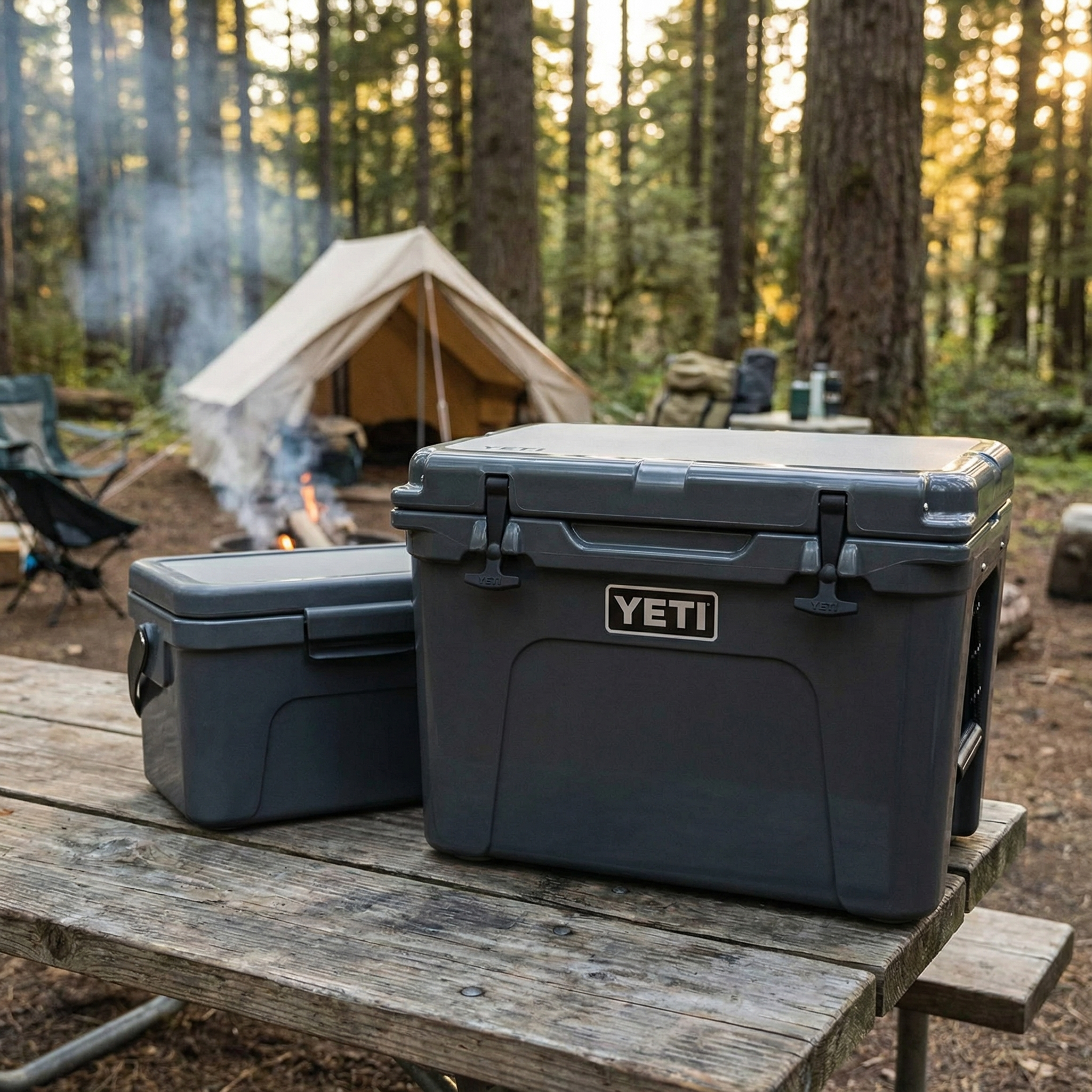
Will keep your ice well ice thanks to up to 3 inches of Permafrost Insulation and an extra thick Fat Wall design is certified Bear-Resistant