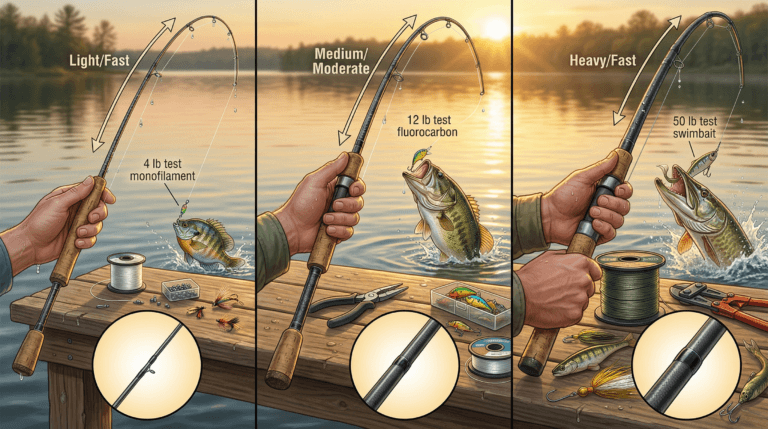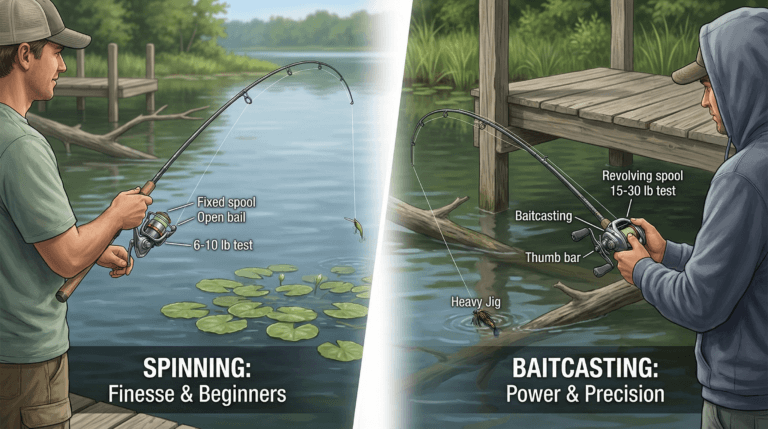
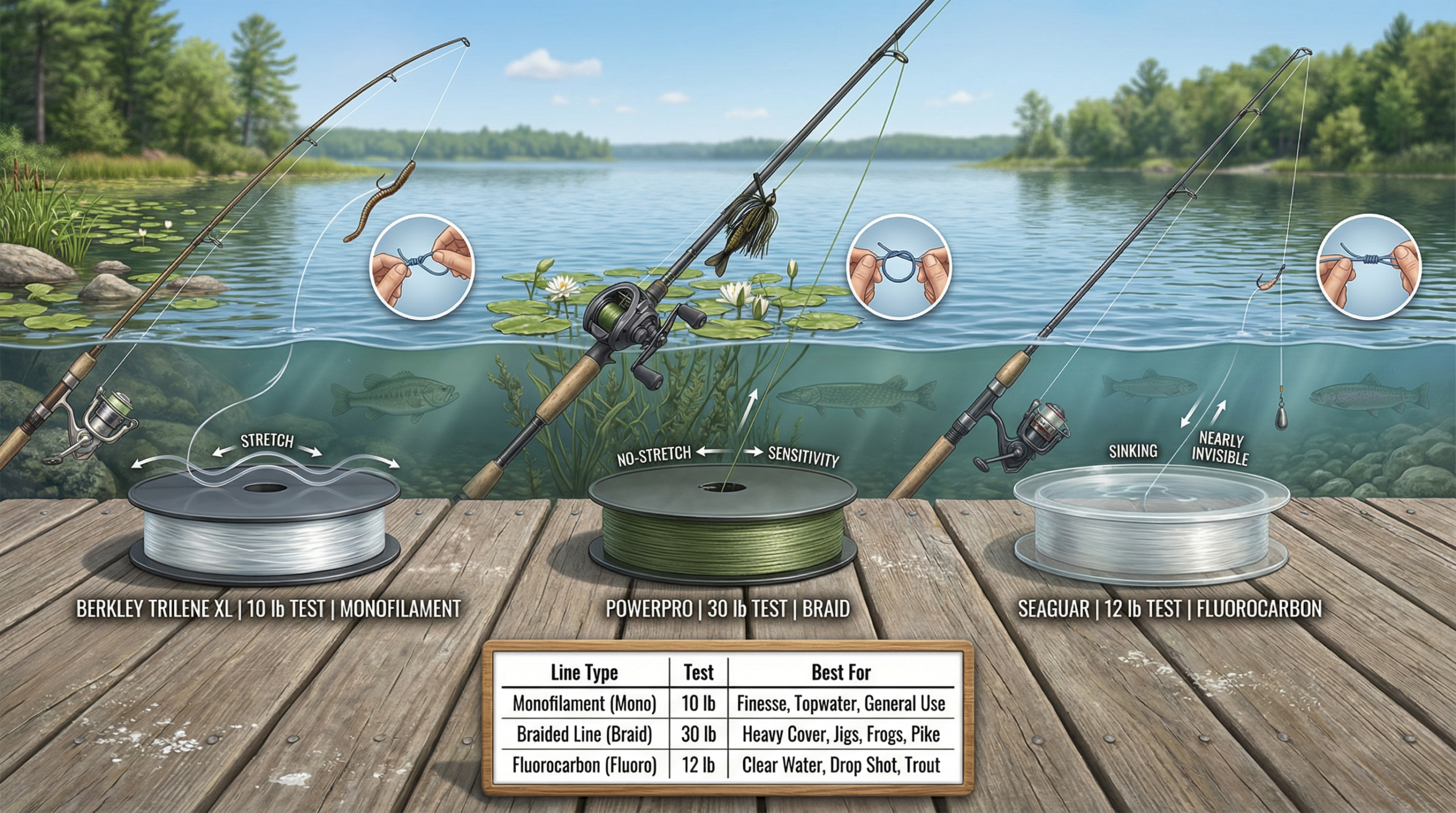
Fishing line seems like an afterthought when you’re excited about rods, reels, and lures—but it’s the invisible workhorse connecting everything. For beginners, choosing the right line dramatically improves casting, bite detection, and fish landings. Wrong line? You lose fish, snap hooks, or struggle with tangles. Here’s your practical guide to the best beginner options and why line choice matters more than most new anglers realize.
Why Line Is Your Silent Game-Changer
Line isn’t just a string—it’s your direct link to the water.
- Sensitivity: Thinner, low-stretch line transmits every tick, tap, and thump from lure or fish.
- Strength: Rated by “test” (pound strength before breaking), it must handle your target species and cover.
- Visibility: Clear water needs an invisible line; murky water tolerates brighter colors.
- Castability: Diameter affects how far and how smoothly your casts fly.
Poor line choice wastes 30-50% of your setup’s potential. Great line multiplies it.
Best Beginner Line Choices (Ranked for Ease)
1. Monofilament (Mono) — Your Training Wheels
- Best for: Total beginners, all species, budget setups.
- Strengths: Cheap ($5-10/spool), stretchy (forgives beginner hooksets), easy to handle, and knots well.
- Recommended: Berkley Trilene XL (8-12 lb test). Smooth casting, decent abrasion resistance.
- Use when: Panfish, bass, walleye, trout. Any rod/reel combo.
- Downside: Stretches (less sensitivity), memory (coils on spool), UV degrades over 1-2 years.
2. Braided Line — Power Without the Learning Curve
- Best for: Beginners ready for bass, pike, or saltwater; heavy cover.
- Strengths: No stretch (instant hooksets), thin diameter (long casts), lasts forever, bites into mono leader for toothy fish.
- Recommended: PowerPro or Sufix 832 (20-30 lb test). Hi-vis yellow for visibility.
- Use when: Flipping jigs, punching mats, deep cranking. Pair with 12-20 lb mono/fluoro leader (2-6 ft).
- Downside: Visible (scares finicky fish), stiff (needs backing), poor knot strength (use Palomar or Uni).
3. Fluorocarbon — Stealth for Clear Water
- Best for: Finicky trout, sight fishing bass, and leader for braid.
- Strengths: Nearly invisible underwater, sinks (great for bottom contact), low stretch.
- Recommended: Seaguar or P-Line Tactical (8-15 lb test).
- Use when: Clear lakes, spooky fish, drop shots, and leader material.
- Downside: Stiff, expensive, difficult to tie knots (use improved clinch).
Affiliate Disclosure
Some links on Angler Supply Guide are affiliate links. If you click a link and make a purchase, we may earn a commission at no extra cost to you.
As an Amazon Associate I earn from qualifying purchases.
We only recommend products we believe are useful for anglers. Product prices and availability are subject to change. Any price and availability information displayed on Amazon at the time of purchase will apply to the purchase of that product.
Line-to-Species Quick Guide
| Target Fish | Line Type | Test Strength | Color |
|---|---|---|---|
| Trout / Panfish | Mono | 4–8 lb | Clear |
| Bass / Walleye | Mono or Braid + Leader | 10–20 lb | Clear or Hi-Vis |
| Pike / Musky | Braid + Wire/Fluoro Leader | 30–50 lb | Hi-Vis |
| Saltwater (Redfish) | Braid + Mono Leader | 20–40 lb | Hi-Vis |
Pro Tips That Save Beginners Frustration
- Start with mono: It’s forgiving, cheap, and versatile. Upgrade later.
- Fill spool properly: 1/8 inch below lip. Loose spool = birdnests.
- Check line monthly: Nicks, curls, UV damage kill performance.
- Leader combo: Braid mainline + mono/fluoro leader = best of both worlds.
- Test strength reality: Buy 20% above rated (12-lb mono rarely holds 12-lb fish).
Your line choice sets the tone for every cast and fight. Cheap mono gets you catching fish today; braid/fluoro unlocks technique tomorrow. Match the line to the conditions, not the trends, and watch your success rate climb fast.
Learn more about your choice of rods and reels: Beginner’s Guide to Choosing Your First Fishing Rod and Reel
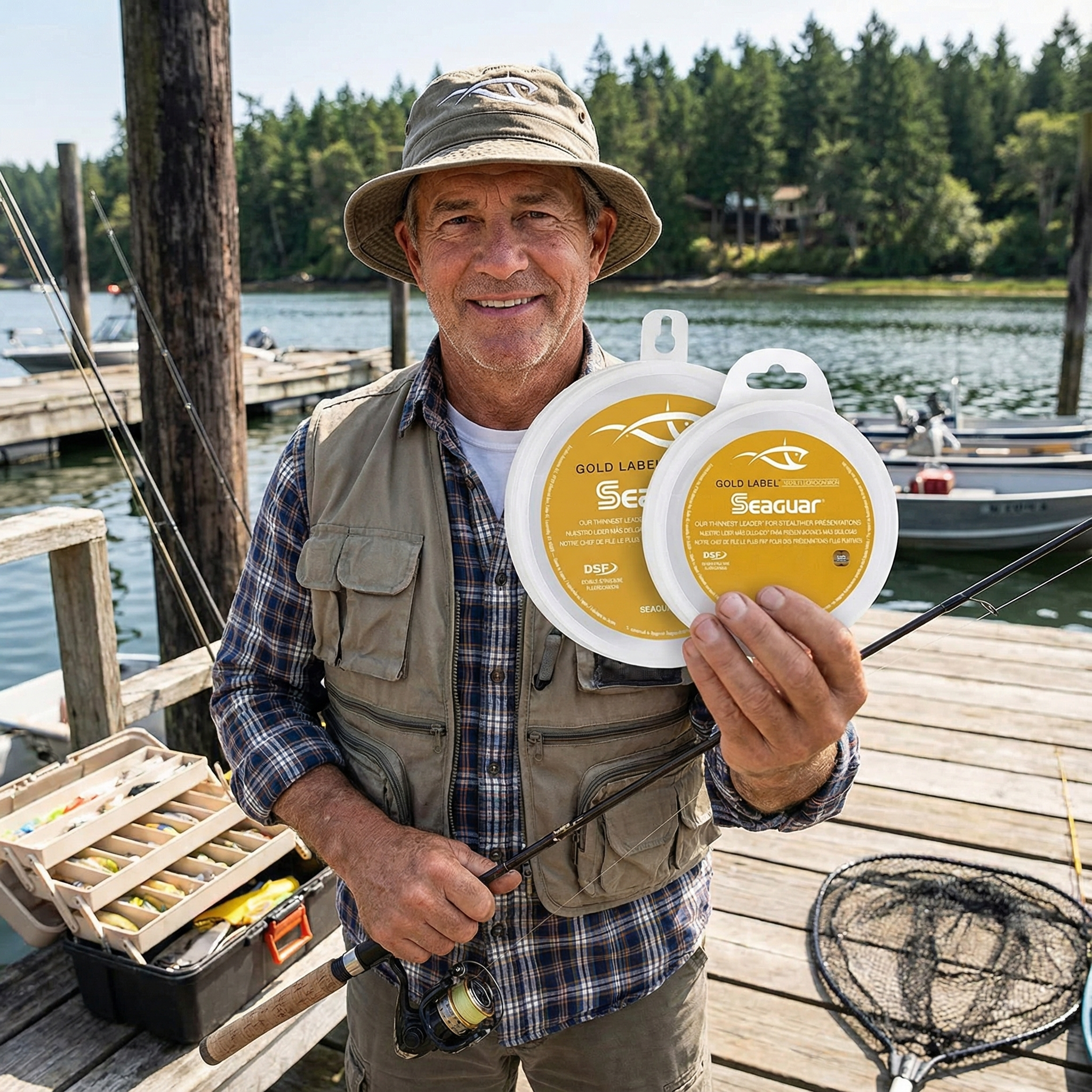
Incredibly thin, this saltwater leader is virtually invisible underwater and allows for natural presentations.
Frequently Asked Questions
What is the best fishing line for complete beginners?
Monofilament (mono) is the best starter line. It’s cheap, forgiving with stretch, easy to cast, and works for nearly every freshwater species from trout to bass.
Should I use braid or mono for bass fishing?
For bass, use mono (8-12 lb) if you’re new, or braid (20-30 lb) with a 12-20 lb mono/fluoro leader for heavy cover like grass or docks. Braid gives power, mono gives forgiveness.
Why does my line keep getting knots and tangles?
Braid creates wind knots if spooled wrong or cast too hard. Mono gets memory coils from old line. Always fill spool to 1/8″ below lip, check line monthly, and use proper knots like Palomar.
Do I need fluorocarbon or is mono good enough?
Mono works great for 90% of beginner fishing. Save fluorocarbon for clear water, spooky trout, or as a leader with braid. It’s expensive and stiffer, so not worth it starting out.
How often should I replace my fishing line?
Replace mono every 1-2 years (UV damage/memory). Braid lasts 3-5 years but check for nicks. Fluorocarbon yearly. If you see curls, frays, or lost fish to break-offs, change it now.
What’s the difference between 8 lb and 12 lb test line?
8 lb test is thinner, more sensitive, and casts farther but breaks easier. 12 lb test handles bigger fish and cover but casts shorter. Match test to your target species size.
Can I mix different line types on the same reel?
Yes — braid mainline with mono/fluoro leader is ideal. Braid for main spool (long casts, no stretch), leader (2-6 ft) for stealth and shock absorption at the business end.
Why is my braid line so visible to fish?
Braid reflects light and has no UV fade resistance. Use clear water colors (green, low-vis gray) or always pair with a 3-6 ft fluorocarbon/mono leader for spooky fish.
How do I know if my line is too thick for my rod?
Check rod’s line rating (usually on blank). Too thick = poor casting, lost sensitivity. Too thin = snapped rod under heavy fish. Stay within rod’s recommended lb test range.
Does fishing line color really matter?
Yes in clear water (