

Your First Fishing Rod and Reel: A Beginner’s Guide That Actually Works Anywhere
Fishing has a strange reputation problem. It looks simple from the outside, yet the moment you try to begin, it feels like you’ve missed a class everyone else attended. Step into a tackle shop, and gear types, fishing terms, and a few unwritten rules instantly surround you.
This guide exists to cut through that.
Not by dumping specifications on you.
Not by pretending there’s one perfect setup.
But by giving you a forgiving starting point—one that works wherever you live and lets you learn without embarrassment.
Start With Reality, Not Aspiration
Before choosing a rod or reel, you need to answer one quiet question honestly:
Where will you actually fish?
- Not where you imagine yourself fishing someday.
- Not the trip you’ll take “eventually.”
- But the water that is closest to you right now.
- A neighborhood pond.
- A river you drive past.
- A public lake.
- A pier or shoreline.
That answer matters because beginners don’t need specialized gear. They need adaptable gear. Most people quit fishing not because they chose the wrong fish species setup, but because their first experience was more challenging than it needed to be.
A versatile setup removes that barrier.
Also Read:
Where Can You Fish Without a Boat? A Beginner’s Location Guide
Why Your First Reel Matters More Than Your First Rod
This is where most beginner advice quietly goes wrong.
You’ll often hear that rods determine sensitivity and reels are secondary. That may be true later. It’s not true at the beginning.
A beginner doesn’t struggle with “feel.”
They struggle with control.
The reel controls:
- How the line leaves the spool during a cast
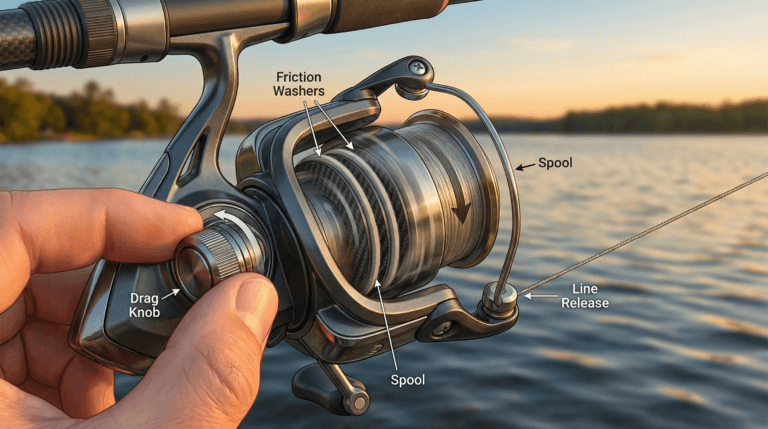
- How smoothly resistance is applied when a fish pulls
- How predictable each turn of the handle feels
A poor reel introduces uncertainty. Line jumps. Drag pulses. Casting becomes inconsistent. None of that teaches technique. It just makes you feel like you’re doing something wrong.
That’s why, for a first setup, spending a little more on the reel pays off immediately.
Reliable spinning reels from manufacturers like Shimano and Daiwa are popular not because of branding, but because their entry-level reels behave predictably. Predictability builds confidence.
And confidence keeps people fishing.
Opportunity to Learn More:
How Spinning Reel Drag Systems Actually Work (Plain English)
Why You Should Skip Baitcasters at the Start
Baitcasting reels are not “advanced” because they’re better. They’re advanced because they demand precision.
They require:
- Thumb control
- Constant attention during the cast
- Comfort correcting mistakes mid-motion
For someone brand new, that’s a steep learning curve layered on top of everything else you’re already trying to figure out.
A spinning reel removes that pressure. The line flows freely. Casting errors are recoverable. You can focus on timing, distance, and placement instead of fixing problems.
Skipping a baitcaster early isn’t avoiding skill. It’s postponing it until it actually helps rather than hinders.
Dig deeper in this post:
Spinning vs Baitcasting Reels: When the Switch Actually Makes Sense
Rod Choice: Simpler Than It Looks
Rod descriptions often feel intimidating, but for a first rod, you’re aiming for balance, not precision.
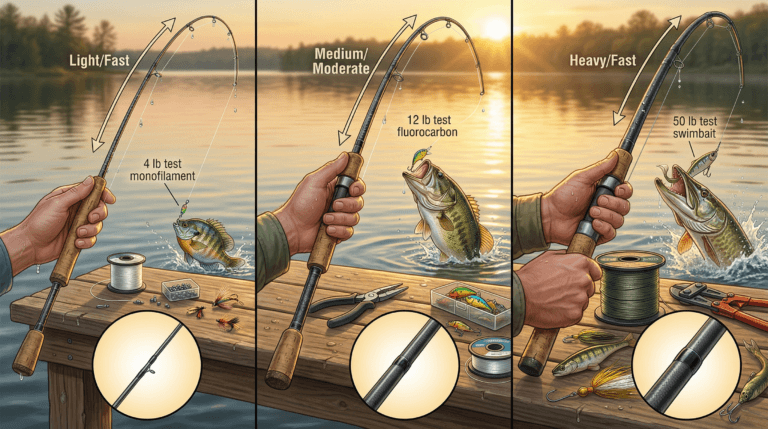
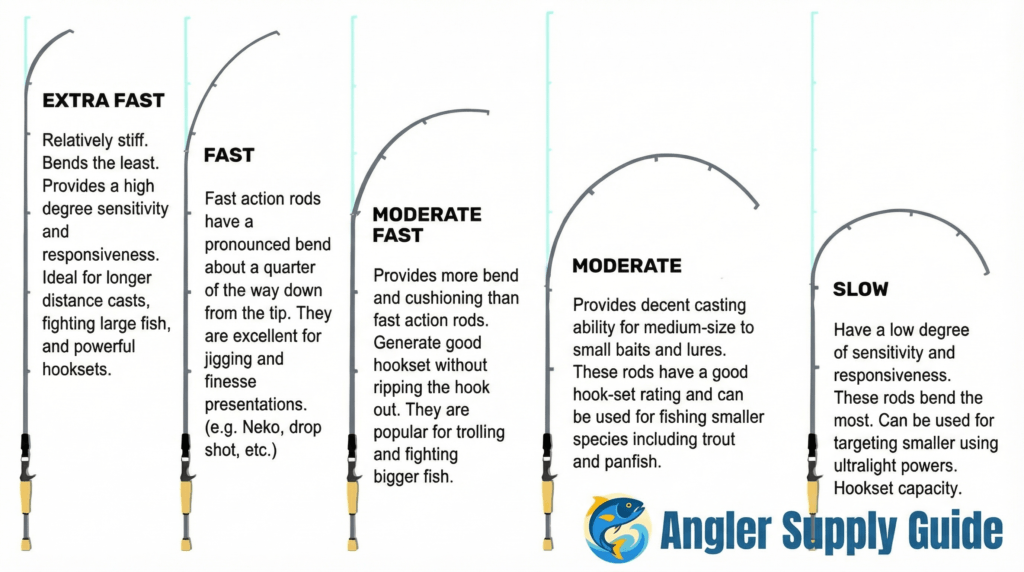
A medium-power rod, around 6’6” to 7’, with a fast or moderate-fast action, covers an enormous range of situations. It’s strong enough for larger fish, flexible enough for smaller ones, and forgiving when your timing isn’t perfect.
This is why rods like the Ugly Stik show up so often in beginner discussions. They’re durable, tolerant of mistakes, and don’t demand careful handling. That matters more than subtle sensitivity when you’re starting.
You’ll learn more with a rod you’re not afraid to use.
Learn More Here:
Rod Power and Action Explained Without the Charts
Affiliate Disclosure
Some links on Angler Supply Guide are affiliate links. If you click a link and make a purchase, we may earn a commission at no extra cost to you.
As an Amazon Associate I earn from qualifying purchases.
We only recommend products we believe are useful for anglers. Product prices and availability are subject to change. Any price and availability information displayed on Amazon at the time of purchase will apply to the purchase of that product.
The “Works Almost Anywhere” Starter Setup
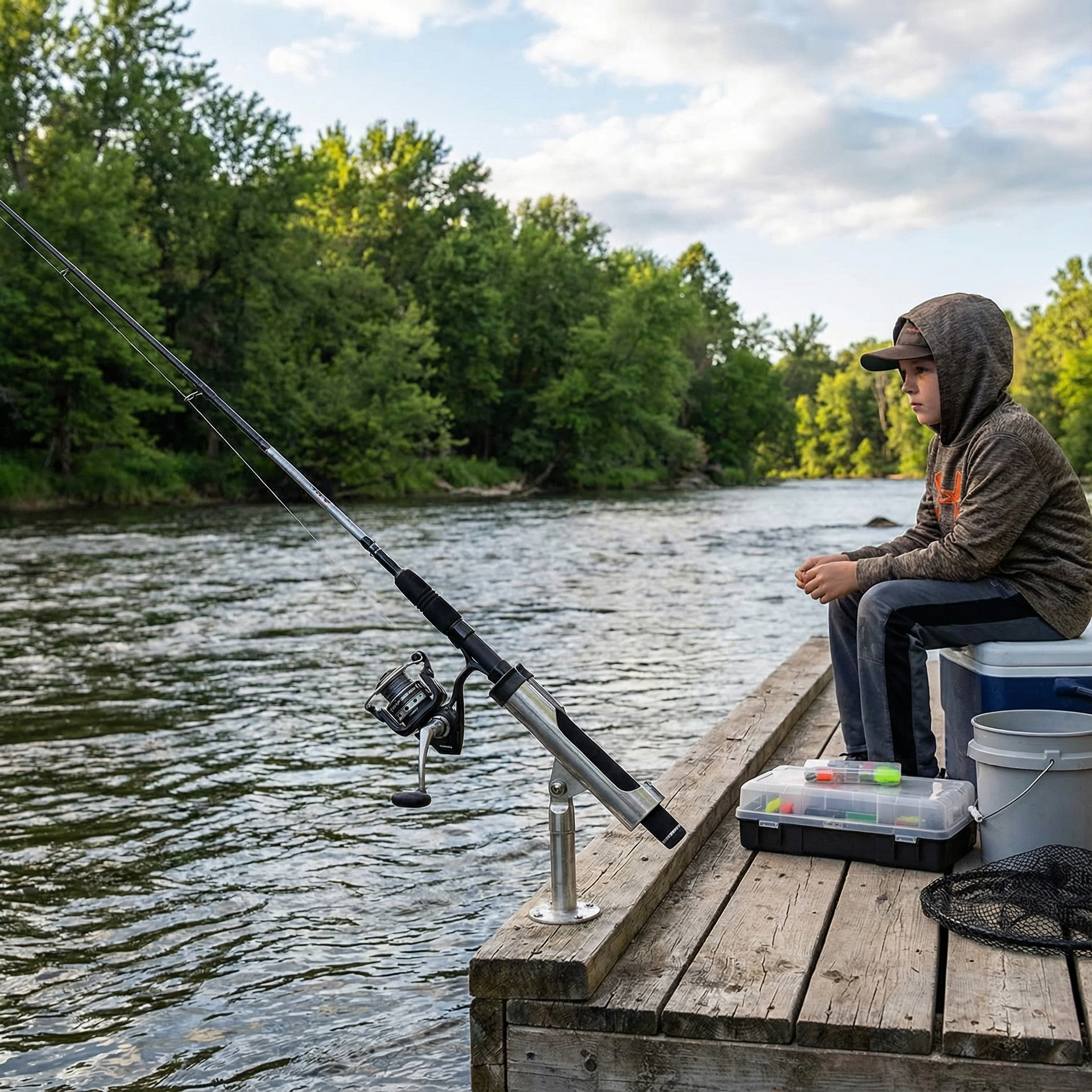
If you want a baseline that performs well in most freshwater situations—and even some light saltwater use—this combination is hard to beat:
- Reel: Spinning reel, size 2500–3000
- Rod: 6’6”–7’ medium power
- Line: 8–12 lb monofilament or braided line with a mono leader
This setup won’t limit you early. It lets you cast lures, fish bait, and adapt as you learn what you enjoy.
It’s not flashy.
It’s reliable.
Exceptional Spinning & Baitcasting Reels – Fish like a gladiator! KastKing Crixus fishing reels feature lightweight carbon-infused frames, CNC-machined aluminum spools, 7+1 double-shielded stainless ball bearings, powerful carbon drags, and many other performance features. These are simply the best value in fishing.
Read This to Learn more:
Best Beginner Line Choices (And Why Line Matters More Than You Think)
Walking Into a Tackle Shop Without Feeling Exposed
There’s a quiet anxiety many adults feel when starting something new in public. Fishing shops can amplify that feeling because knowledge is assumed.
Here’s a simple script that works:
“I’m just getting started. I want a spinning setup that works in most places.”
That sentence does three things:
- Signals you’re new
- Defines versatility as the goal
- Prevents unnecessary upselling
If the shop listens, you’re in the right place. If not, you’re free to leave.
Fishing is not a performance. It’s a practice.
Also Read:
What to Ask (and Not Ask) at a Tackle Shop
Best Ultralight Fishing Rods for Trout & Smallmouth (Ponds & Lakes, 2026)