How to Tie the Palomar Knot
If you’ve ever lost a fish and blamed your knot, you’re not alone. The Palomar Knot is one of those rare knots that’s fast, strong, and simple enough to tie when your hands are cold or the boat’s rocking.
I like it because it locks down hard without needing fancy wraps. It’s famous with braided line, but it also works great with mono and fluorocarbon if you tighten it the right way (slow, wet, and steady).
Below, I’ll walk you through the exact steps, quick fixes for the usual mistakes, and one clear time when you should choose a different knot.
Why the Palomar Knot is so popular (and what it’s best for)
The Palomar knot earns its reputation because the line is doubled through the eye. That doubled strand spreads load better than many single-line knots, which is a big reason it tests strong in real fishing, not just in theory.
It’s a go-to for:
- Hooks (especially single hooks)
- Swivels
- Jigs and many smaller lures with a normal-sized eye
Braid is where this knot shines, since braid can slip with some other knots. With mono or fluorocarbon, it still holds well, but you can’t rush it. A little moisture before cinching and a slower pull makes a bigger difference than most anglers think.
When not to use the Palomar knot (big lures and bulky tackle)
The Palomar knot has one built-in limitation: you have to pass a big loop over the entire lure or hardware. With large hard baits, oversized snaps, or bulky rigs, that loop can be awkward, and you’ll waste a lot of line with a long tag end.
In that case, I’ll usually swap to something more flexible for big tackle, like an Improved Clinch Knot, and move on.
How to tie the Palomar knot step by step
- Double the line: Pull out about 6 to 8 inches, then fold it to make a loop (use more if the eye is tiny).
- Pinch the doubled end: This gives you control, especially with fluorocarbon, mono, or a small eyelet.
- Run the doubled line through the eye of the hook, swivel, or lure.
- Slide the tackle down a bit on the doubled section, leaving room to tie.
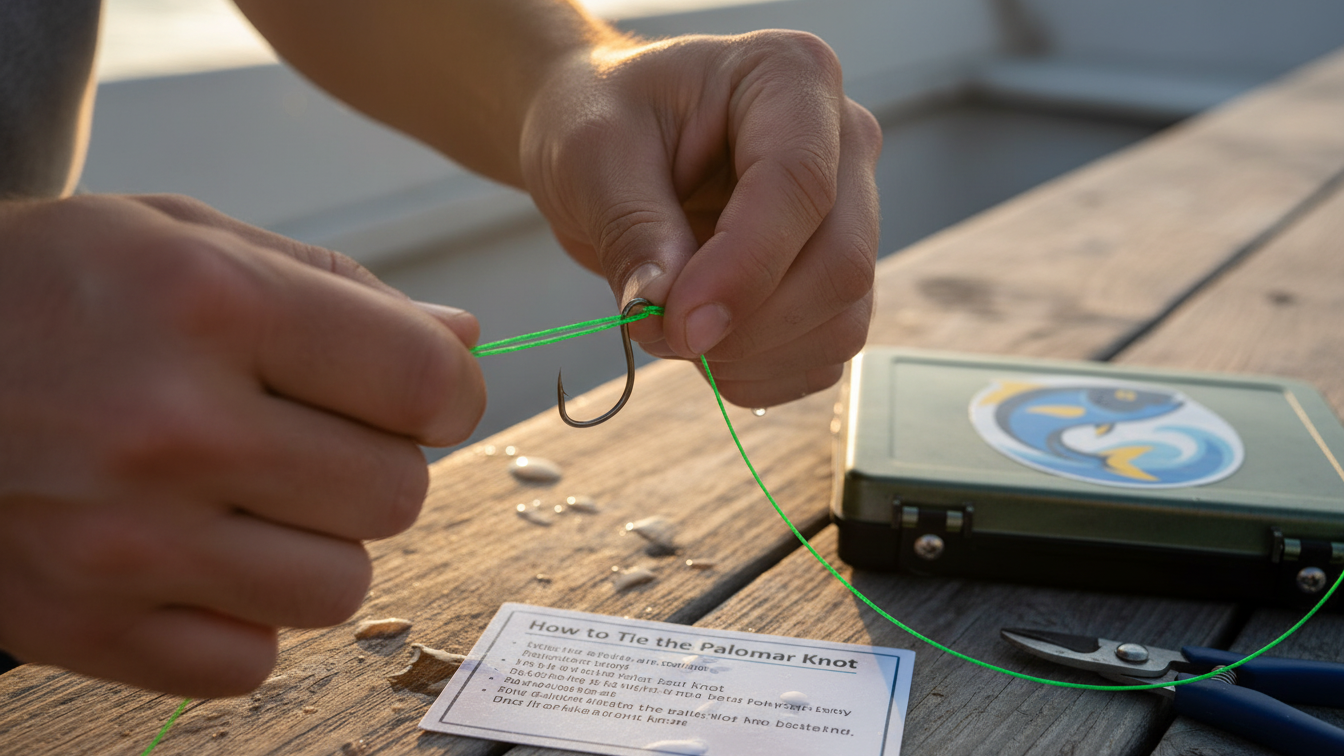
- Tie a loose overhand knot with the doubled line, don’t cinch it yet.
- Keep the knot pinched, then pass the big loop over the hook or lure.
- Bring the loop back up so it sits above the eye.
- Pull slack out gently until things start to line up.
- Wet the line (water or a quick spit is fine).
- Tighten slowly and evenly, then trim the tag end once it’s snug.
Quick checks while tightening so the knot seats right
Keep that overhand knot loose until the loop is fully over the tackle. If you cinch early, you’ll fight it, or worse, you’ll damage the line. Watch for crossed strands near the eye, they’re a quiet weak spot. Wetting helps reduce heat and drag, which matters more with fluorocarbon. When you pull, pull steady on the main line and tag end so the knot slides down clean.
Common Palomar knot mistakes (and easy fixes)
Not wetting before cinching: Dry tightening can nick or heat the line. Fix it by wetting right before the final pull.
Doubling too little line: If the loop won’t go over the lure, start over with a longer doubled section. It feels wasteful, but it’s faster than forcing it.
Twisted or crossed loop: If the lines overlap, back it off and re-seat it before you lock it down.
Rushing fluorocarbon: Fluoro doesn’t like sudden shock. Tighten slower, add more moisture, and keep tension smooth.
A simple practice trick: tie it at home with thicker or bright line a few times. On the water, your hands will just do it.
Wrapping Up
The Palomar Knot is worth learning because it’s quick, strong, and dependable when you tie it with care. Give yourself enough doubled line, keep the overhand knot loose until the loop is over the tackle, wet it, then tighten in a slow, even pull. Practice a handful of reps and it’ll stick. And when the lure is too big to pass the loop over, switch knots without overthinking it.